


Page 211 - DK Eyewitness Travel Guides - The World's Must-See Places
P. 211
209
l CHINA
PAA6TAN
) - Oelhi•
THE GREATS TUPA;
SANCHI
Murnbai• I NDIA
ARAB/All
SEA
lllf)IAII
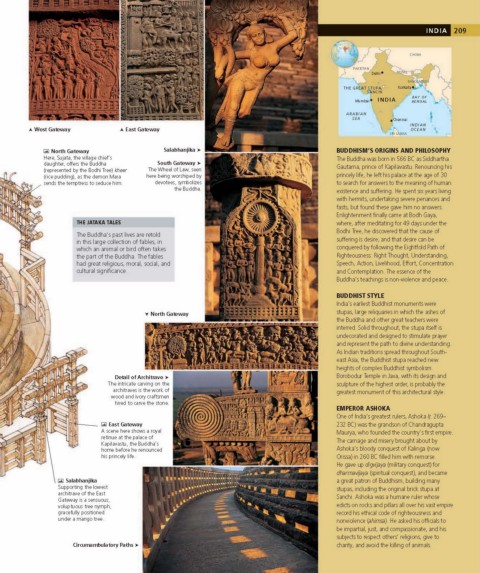
A West Gateway A East Gateway OCEAW
SRI lANKA
~ North Gateway Salabhanjika ,.. BUDDHISM'S ORIGINS AND PHILOSOPHY
Here, S ujata, the village chief's The Buddha was born in 566 BC as Siddhartha
daughter, offers the Buddha South Gateway ,.. Gautama, prince of Kapilavastu. Renouncing his
(represented by the Bodhi T ree) kheer The Wheel of Law, seen
(rice pudding), as the demon Mara here being worshiped by princely life, he left his palace at the age of 30
sends the temptress to seduce him. devotees, symbolizes to search for answers to the meaning of human
the Buddha. existence and suffering. He spent six years living
with hermits, undertaking severe penances and
fasts, but found these gave him no answers.
Enlightenment finally came at Bodh Gay a,
THE JATAKA TALES where, after meditating for 49 days under the
Bodhi Tree, he discovered that the cause of
The B uddha's past lives are retold
in this large collection of fables, in suffering is desire; and that desire can be
wh1ch an animal or bird often takes corquered by following the E ig-,tfold Path of
the part of the Buddha. The fables Righteousness: Right Thouifit, Urderstand1ng,
had great religious, moral, social, and Speech, ts.ction_ livelihood, E ffort, Concentration
cultural significance. and Contemplation. The essence of the
Buddha's teachings is non-violence and peace
BUDDHIST SffiE
India's earliest Buddhist monuments were
stupas, large reliquaries in V'klich the ashes of
v North Gateway
the B uddha and other great teachers were
interred. Solid throughout. the stupa itsel f is
undecorated and designed to stimulate prayer
and represent the path to divine understanding.
As Indian traditions spread throughout South-
east Asia, the Buddhist stupa reached new
heights of complex Buddhist symbolism.
Borobodur Temple in Java, with its design and
The intricate carving on the sculpture of the highest order, is probabl y the
architraves is the work of greatest monument of this architectural style.
wood and ivory craftsmen
hired to carve the stone.
EMPEROR ASHOKA
One of India's greatest rulers, Ashoka I[ 269-
- --- ~ East Gateway 232 BC) was the grandson of Chandragupta
A scene here shows a r(){al M aury a, who founded the country's first emp1re
retinue at the palace of Tht> camagt> and misery brought about by
Kapilavastu, the Buddha's
home before he renounced Ashoka's bloody conquest of Kalinga (now
his princely life. Orissa) in 260 BC fillt>d him with remorse
He gave ~ dig,tijaya (rmlitary conquest) for
dharmavijaya (spiritua conquest), and became
~ Salabhanjika a great patron of Buddhism, bUilding many
Supporting the lcmest stupas, including the original brick stupa at
architrave of the East Sanchi. Ashoka was a humane ruler whose
Gateway is a sensuous,
voluptuous tree nymph, edicts on rocks and pillars all over his vast empire
gracefully positioned record his ethical code of righteousness and
under a mango tree. nonviolence (ahimsa) He asked his officials to
be impartial, just, and compassionate, and his
subjects to respect others' religions, give to
Clrcumambulatory Paths,.. charity, and avoid the killing of animals.

