


Page 295 - (DK Eyewitness) Travel Guide - Australia
P. 295
UL UR U-K A T A T JUT A NA TIONAL P ARK 293
–
–
The Anangu of Uluru 500,000 annual visitors. Nestling
between the desert dunes 20 km
Archaeological evidence suggests that Aboriginal people have lived at (12 miles) north of Uluru and just
Uluru for at least 22,000 years and that both Uluru and Kata Tjuta outside the national park boun-
have long been places of enormous ceremonial and cultural dary, it serves as a comfortable,
significance to a number of Aboriginal tribes. green and relaxing base for
The traditional owners of Uluru and Kata Tjuta are the Anangu exploring Uluru and Kata Tjuta.
people. They believe that both sites were formed during the creation The resort offers all standards of
period by ancestral spirits who also gave them the laws and rules of accommodation, from five-star
society that they live by today. The Anangu believe they are direct luxury to backpacker accommo-
descendants of these ancestral beings and that, as such, they are dation and camping grounds,
responsible for the protection and management of these lands.
and is the only option for those
who want to stay in the immed-
iate vicinity (see pp489–90).
The visitors’ centre at Yulara has
information about the park and
its geology, flora and fauna. It also
sells souvenirs and helps to
arrange tours with the licensed
operators in the park. Every day
at 7:30am there is a free guided
walk through the wonderful
native garden of the Desert
Gardens Hotel (174 Yulara Drive;
Tel: 08 8957 7714). Each evening
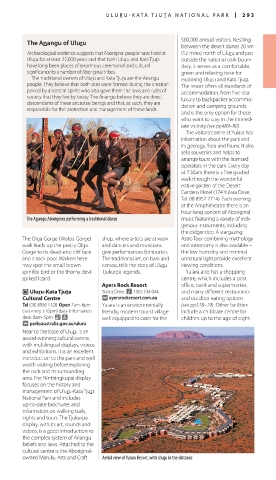
at the Amphitheatre there is an
hour-long concert of Aboriginal
The Anangu Aborigines performing a traditional dance music featuring a variety of indi-
genous instruments, including
the didgeridoo. A stargazing
The Olga Gorge (Walpa Gorge) shop, where artists are at work Astro Tour combining mythology
walk leads up the pretty Olga and dancers and musicians and astronomy is also available –
Gorge to its dead-end cliff face give performances for tourists. the low humidity and minimal
and a rock pool. Walkers here The traditional art, on bark and unnatural light provide excellent
may spot the small brown canvas, tells the story of Uluru viewing conditions.
spinifex bird or the thorny devil Tjukurpa legends. Yulara also has a shopping
spiked lizard. centre, which includes a post
Ayers Rock Resort office, bank and supermarket,
E Uluru-Kata Tjuta Yulara Drive. n 1300 134 044. and many different restaurants
Cultural Centre ∑ ayersrockresort.com.au and outdoor eating options
Tel (08) 8956 1128. Open 7am–6pm Yulara is an environmentally (see pp518–19). Other facilities
(last entry 5:30pm) daily. Information friendly, modern tourist village include a childcare centre for
desk: 8am–5pm. & 7 well equipped to cater for the children up to the age of eight.
∑ parksaustralia.gov.au/uluru
Near to the base of Uluru is an
award-winning cultural centre,
with multilingual displays, videos
and exhibitions. It is an excellent
introduction to the park and well
worth visiting before exploring
the rock and its surrounding
area. The Nintiringkupai display
focuses on the history and
management of Uluru-Kata Tjuta
National Park and includes
up-to-date brochures and
information on walking trails,
sights and tours. The Tjukurpa
display, with its art, sounds and
videos, is a good introduction to
the complex system of Anangu
beliefs and laws. Attached to the
cultural centre is the Aboriginal-
owned Maruku Arts and Craft Aerial view of Yulara Resort, with Uluru in the distance

