


Page 136 - (DK) Help Your Kids with Growing Up: A No-Nonsense Guide to Puberty and Adolescence
P. 136
134       DIGITAL  LIFE


        Making judgements                                                  SEE ALSO
                                                                           ‹
                                                                           ‹ 130–131  Social media
                                                                            132–133  Digital self
        The Internet is full of content – adverts, news, opinions, photos, and   Staying safe online   140–141  ›
        stories – produced by and shared on many different sources. It can   Understanding the news   160–161  ›
        be hard to know what and who to trust, so approaching information
        with a critical eye is the best way to separate fact from fiction.


        False information
        False information can be shared in articles by journalists who     Questions to ask
        haven’t properly checked the facts, or spread by people or
        organizations who want others to believe inaccurate information
        to suit their own agenda. It’s a big problem because people can   •   Are other sites reporting this story?
        start to believe things that aren’t true, or can claim that something   What is their response to it?
        is fake just because they disagree with it.            • Who put this information there and why?

                                                               •   Is there any evidence to support what’s
                                                                 being said here?
                                                               •   Does the site have an editorial bias?
                                                                Some sites have a particular political or
                                                                cultural outlook that affects what news
                                                                they report and how.


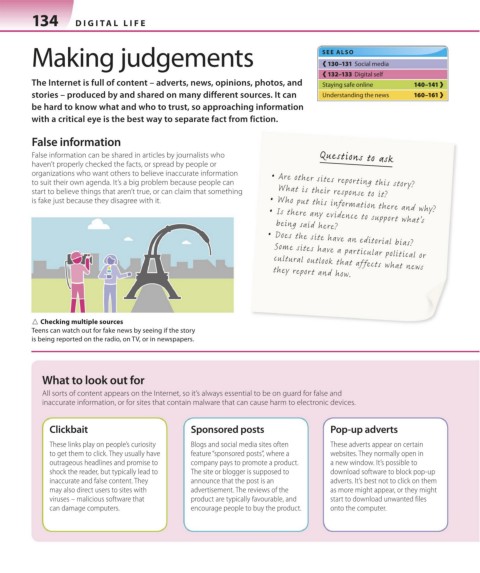
        △ Checking multiple sources
        Teens can watch out for fake news by seeing if the story
        is being reported on the radio, on TV, or in newspapers.


           What to look out for
           All sorts of content appears on the Internet, so it’s always essential to be on guard for false and
           inaccurate information, or for sites that contain malware that can cause harm to electronic devices.


            Clickbait                        Sponsored posts                 Pop-up adverts
            These links play on people’s curiosity   Blogs and social media sites often   These adverts appear on certain
            to get them to click. They usually have   feature “sponsored posts”, where a   websites. They normally open in
            outrageous headlines and promise to   company pays to promote a product.   a new window. It’s possible to
            shock the reader, but typically lead to   The site or blogger is supposed to   download software to block pop-up
            inaccurate and false content. They   announce that the post is an   adverts. It’s best not to click on them
            may also direct users to sites with   advertisement. The reviews of the   as more might appear, or they might
            viruses – malicious software that    product are typically favourable, and   start to download unwanted files
            can damage computers.            encourage people to buy the product.  onto the computer.


   134-135_Making_judgements.indd   134                                                              24/03/2017   17:18

