


Page 140 - (DK) Help Your Kids with Growing Up: A No-Nonsense Guide to Puberty and Adolescence
P. 140
138       DIGITAL  LIFE


        Cyberbullying                                                      SEE ALSO
                                                                           ‹
                                                                           ‹ 94–95  Anxiety and depression
                                                                            130–131  Social media
        Digital communication and online profiles are easy and fast        Bullying             150–151  ›
        ways to share information with lots of people, but they can        Discrimination       152–153  ›
        also be used to upset and hurt people.

        What is cyberbullying?
        Threatening or embarrassing someone through technology is a type of
        bullying. With many people carrying electronic devices 24/7, cyberbullying
        can occur at any time of day, no matter where the bully and bullied person
        are – making it very difficult for a person to avoid once they’ve been targeted.
          Due to the ease with which information can be shared on the Internet, some
        types of cyberbullying can quickly reach a very wide audience, exacerbating the
        hurt and humiliation of victims. And, once something has been posted online,
        removing it completely can sometimes be impossible, causing harm to the
        bullied person long after the actual act first happened.

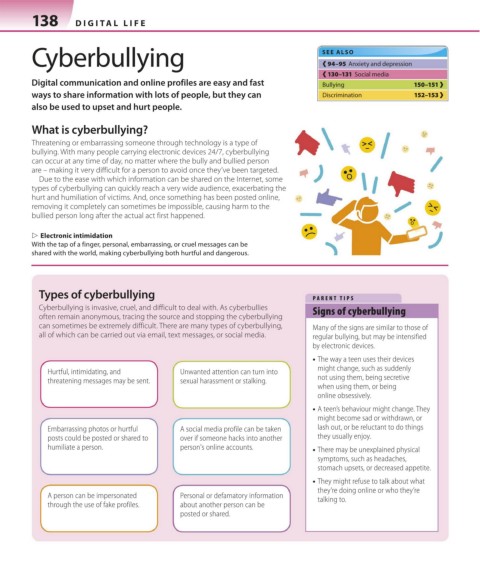
        ▷ Electronic intimidation
        With the tap of a finger, personal, embarrassing, or cruel messages can be
        shared with the world, making cyberbullying both hurtful and dangerous.


          Types of cyberbullying                                         P ARENT  TIPS
          Cyberbullying is invasive, cruel, and difficult to deal with. As cyberbullies    Signs of cyberbullying
          often remain anonymous, tracing the source and stopping the cyberbullying
          can sometimes be extremely difficult. There are many types of cyberbullying,    Many of the signs are similar to those of
          all of which can be carried out via email, text messages, or social media.  regular bullying, but may be intensified
                                                                         by electronic devices.
                                                                         • The way a teen uses their devices
            Hurtful, intimidating, and    Unwanted attention can turn into   might change, such as suddenly
            threatening messages may be sent.  sexual harassment or stalking.  not using them, being secretive
                                                                          when using them, or being
                                                                          online obsessively.
                                                                         • A teen’s behaviour might change. They
                                                                          might become sad or withdrawn, or
            Embarrassing photos or hurtful   A social media profile can be taken   lash out, or be reluctant to do things
            posts could be posted or shared to   over if someone hacks into another   they usually enjoy.
            humiliate a person.           person's online accounts.      • There may be unexplained physical
                                                                          symptoms, such as headaches,
                                                                          stomach upsets, or decreased appetite.
                                                                         • They might refuse to talk about what
                                                                          they’re doing online or who they’re
            A person can be impersonated   Personal or defamatory information   talking to.
            through the use of fake profiles.  about another person can be
                                          posted or shared.


   138-139_Cyberbullying.indd   138                                                                  24/03/2017   17:18

