


Page 176 - (DK) Help Your Kids with Growing Up: A No-Nonsense Guide to Puberty and Adolescence
P. 176
174       F AMILIES


        Parent-teen relationships                                          SEE ALSO             176–177  ›

                                                                           Building trust
                                                                           Dealing with conflict   178–179  ›
        The family dynamic evolves as a teen matures, and can test         Difficult events     180–181  ›
        the parent-teen relationship. With both sides feeling mixed        Siblings             182–183  ›
        emotions, this time can be challenging.

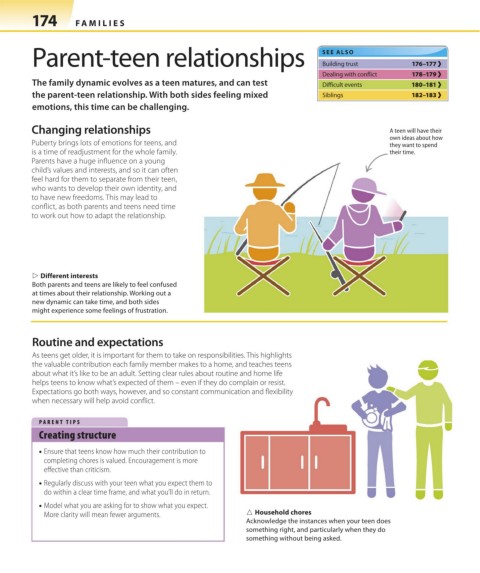
        Changing relationships                                                             A teen will have their
                                                                                           own ideas about how
        Puberty brings lots of emotions for teens, and                                     they want to spend
        is a time of readjustment for the whole family.                                    their time.
        Parents have a huge influence on a young
        child’s values and interests, and so it can often
        feel hard for them to separate from their teen,
        who wants to develop their own identity, and
        to have new freedoms. This may lead to
        conflict, as both parents and teens need time
        to work out how to adapt the relationship.


        ▷ Different interests
        Both parents and teens are likely to feel confused
        at times about their relationship. Working out a
        new dynamic can take time, and both sides
        might experience some feelings of frustration.


        Routine and expectations
        As teens get older, it is important for them to take on responsibilities. This highlights
        the valuable contribution each family member makes to a home, and teaches teens
        about what it’s like to be an adult. Setting clear rules about routine and home life
        helps teens to know what’s expected of them – even if they do complain or resist.
        Expectations go both ways, however, and so constant communication and flexibility
        when necessary will help avoid conflict.

          P ARENT  TIPS
          Creating structure
          • Ensure that teens know how much their contribution to
           completing chores is valued. Encouragement is more
           effective than criticism.
          • Regularly discuss with your teen what you expect them to
           do within a clear time frame, and what you’ll do in return.
          • Model what you are asking for to show what you expect.
           More clarity will mean fewer arguments.        △ Household chores
                                                          Acknowledge the instances when your teen does
                                                          something right, and particularly when they do
                                                          something without being asked.


   174-175_Parent_teen_relationships.indd   174                                                      24/03/2017   17:19

