


Page 203 - (DK) Help Your Kids with Growing Up: A No-Nonsense Guide to Puberty and Adolescence
P. 203
UNHEALTH Y  RELATIONSHIPS            201

                                                          Why people stay
          Signs of an unhealthy relationship              It is very easy to say, “I would never allow myself to be treated

          An unhealthy relationship doesn’t usually start out   that way”, but there are lots of reasons that can make it hard
                                                          for someone to walk away from a bad relationship. Sometimes,
          that way. It often begins with a small insult that’s in   the people in the relationship just don’t recognize that it’s
          the grey area of what’s appropriate, and becomes   unhealthy, even if it seems obvious from the outside. At other
          more abusive, and sometimes violent, over time.    times, people stay because they think it will get better.
          It is only usually once both people are invested in
          the relationship that the abuse, be it physical or
          emotional, becomes apparent. Pay attention
          to early warning signs.


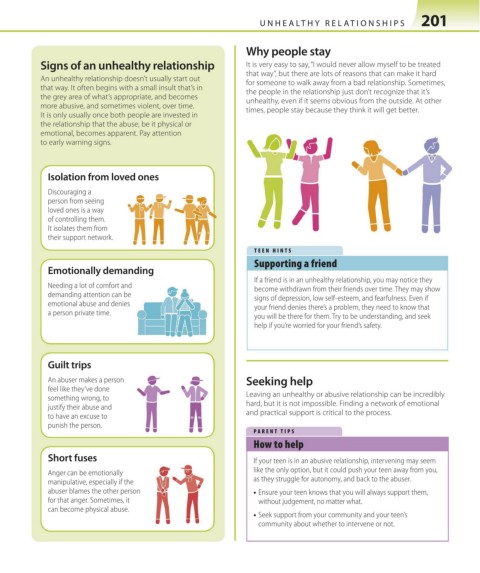
            Isolation from loved ones
            Discouraging a
            person from seeing
            loved ones is a way
            of controlling them.
            It isolates them from
            their support network.
                                                            TEEN  HINTS
                                                            Supporting a friend
            Emotionally demanding
                                                            If a friend is in an unhealthy relationship, you may notice they
            Needing a lot of comfort and                    become withdrawn from their friends over time. They may show
            demanding attention can be                      signs of depression, low self-esteem, and fearfulness. Even if
            emotional abuse and denies                      your friend denies there’s a problem, they need to know that
            a person private time.
                                                            you will be there for them. Try to be understanding, and seek
                                                            help if you’re worried for your friend’s safety.


            Guilt trips
            An abuser makes a person                      Seeking help
            feel like they’ve done
            something wrong, to                           Leaving an unhealthy or abusive relationship can be incredibly
            justify their abuse and                       hard, but it is not impossible. Finding a network of emotional
            to have an excuse to                          and practical support is critical to the process.
            punish the person.
                                                           P ARENT  TIPS
                                                           How to help
            Short fuses                                    If your teen is in an abusive relationship, intervening may seem

            Anger can be emotionally                       like the only option, but it could push your teen away from you,
            manipulative, especially if the                as they struggle for autonomy, and back to the abuser.
            abuser blames the other person                 • Ensure your teen knows that you will always support them,
            for that anger. Sometimes, it                    without judgement, no matter what.
            can become physical abuse.
                                                           • Seek support from your community and your teen’s
                                                             community about whether to intervene or not.


   200-201_Unhealthy_Relationships.indd   201                                                        24/03/2017   17:19

