


Page 217 - Atlas Of The World's Strangest Animals
P. 217
SEA ANEMONE           217


             this large and diverse group, some anemone have found   Clownfishes have such a famous association with
             that there are advantages to working with others. Both  anemone that they’ve become known as anemonefishes.
             species of Isosicyonis, for instance, live in a symbiotic  Twenty-seven species in the genus Amphiprion and one
             relationship with hermit crabs.These odd crustaceans have  species of Premmas live within the anemones’ toxic
             long, soft bodies, which they protect from predators using  tentacles.A combination of the fish’s movements and
             an empty, salvaged sea shell.Amazingly, Isosicyonis attach  chemicals in the mucus coat that covers their bodies
             themselves to the outside of the crabs’ shell.This provides  prevents the anemones’ stinging cells from attacking them.
             the crab with superb defensive armour and makes the    It’s a mutual defence pact. Clownfish gain a deadly ally and
             anemone more mobile. Sea anemone often spend their     they, in turn, prevent the anemone being eaten by
             entire lives in the same spot, waiting for prey to pass by.  butterflyfish.Without the anemone, clownfishes quickly
             They can move if they need to, but it’s a slow process. By  succumb to predators, and it’s been suggested that they’re
             hitching a lift, Isosicyonis can not only feed on the crabs’  so reliant on this relationship they couldn’t survive
             leftovers but any prey it encounters as the crab wanders.  without it.


              Comparisons

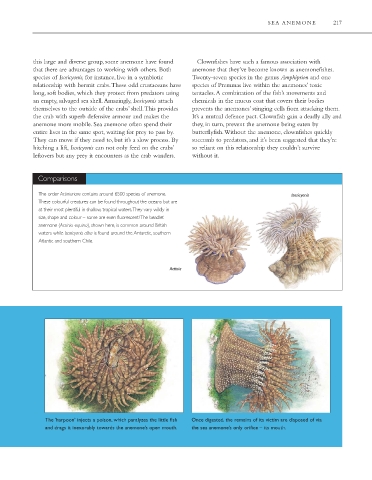
              The order Actiniariare contains around 6500 species of anemone.                         Isosicyonis
              These colourful creatures can be found throughout the oceans but are
              at their most plentiful in shallow, tropical waters.They vary wildly in
              size, shape and colour – some are even fluorescent! The beadlet
              anemone (Actinia equina), shown here, is common around British
              waters while Isosicyonis alba is found around the Antarctic, southern
              Atlantic and southern Chile.


                                                            Actinia


                 The ‘harpoon’ injects a poison,which paralyzes the little fish  Once digested, the remains of its victim are disposed of via
                 and drags it inexorably towards the anemone’s open mouth.  the sea anemone’s only orifice – its mouth.


                                             (c) 2011 Marshall Cavendish. All Rights Reserved.

