


Page 24 - All About History - Issue 18-14
P. 24
Mass Media


         Day in the life


        AMEDIEVALMONK


         KEEPERS OF KNOWLEDGE, TRANSCRIBING

         THE PAST FOR FUTURE GENERATIONS,
         EUROPE, 14TH CENTURY

             For many in the Middle Ages, where plague, war and poverty were
             common,thehallsoftoweringmonasterieswereasafehaven.Anyone
             couldbecomeamonk,buttheirliveswerefarfromeasy;most
             monasteries followed the rule of St Benedict, commanding that all
             monksliveastrictscheduleofprayerandmanuallabour.The
             monasterieswereanintegralpartofeverycommunity,thehubsof
             learning and education in an illiterate world and one of their most
             important tasks was the making of books. Before mechanical
             printing,bookswerehandmadeobjects,treasuredasworks
             ofartandassymbolsofenduringknowledgeand
             many of them were produced by monks.


                MORNING PRAYER
                The day would begin bright and early
                for medieval monks as they rose before
                dawn for the morning service at 5am.
                The monks’ entire day was structured
                around The Book Of Hours, which was
                split into eight sections of prayers
                intended to be read at specific times of
                day. Prayers would be held at 5am, 6am,
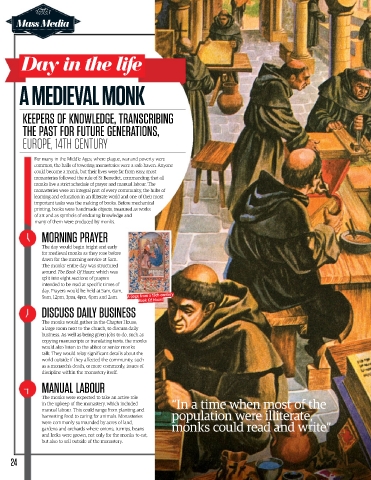
                9am, 12pm, 3pm, 4pm, 6pm and 2am.   A page from a 15th-century
                                                  Book Of Hours


                DISCUSS DAILY BUSINESS
                The monks would gather in the Chapter House,
                a large room next to the church, to discuss daily
                business. As well as being given jobs to do, such as
                copying manuscripts or translating texts, the monks
                would also listen to the abbot or senior monks
                talk. They would relay significant details about the
                world outside if they affected the community, such
                as a monarch’s death, or more commonly, issues of
                discipline within the monastery itself.


                MANUAL LABOUR
                The monks were expected to take an active role
                in the upkeep of the monastery, which included   “In a time when most of the
                manual labour. This could range from planting and
                harvesting food to caring for animals. Monasteries   population were illiterate,
                were commonly surrounded by acres of land,
                gardens and orchards where onions, turnips, beans   monks could read and write”
                and leeks were grown, not only for the monks to eat,
                but also to sell outside of the monastery.


     24

