


Page 136 - (DK) Super Shark Encyclopedia: And Other Creatures of the Deep
P. 136
SHELLFISH                                                             FLOATING FEAST
                                                                                    It is tough dealing with a crab
                                                                                    lunch when you are lying on
              SMASHER                                                               your back in the water. But sea
                                                                                    otters are nicely buoyant—and
                                                                                    can even wrap themselves in
                                                                                    seaweed to stop themselves
                                                                                    from floating off too far.
               SEA OTTER


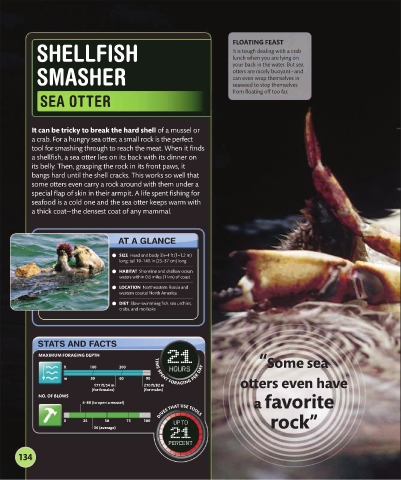
            It can be tricky to break the hard shell of a mussel or
            a crab. For a hungry sea otter, a small rock is the perfect
            tool for smashing through to reach the meat. When it finds
            a shellfish, a sea otter lies on its back with its dinner on
            its belly. Then, grasping the rock in its front paws, it
            bangs hard until the shell cracks. This works so well that
            some otters even carry a rock around with them under a
            special flap of skin in their armpit. A life spent fishing for
            seafood is a cold one and the sea otter keeps warm with
            a thick coat—the densest coat of any mammal.


                                           AT A GLANCE


                                         •  SIZE  Head and body 3¼–4 ft (1–1.2 m)
                                            long; tail 10–14½ in (25–37 cm) long
                                         •  HABITAT  Shoreline and shallow ocean
                                            waters within 0.6 miles (1 km) of coast
                                         •  LOCATION  Northeastern Russia and
                                            western coastal North America
                                         •  DIET  Slow-swimming fish, sea urchins,
                                            crabs, and mollusks


               STATS AND FACTS
                                                            21
               MAXIMUM FORAGING DEPTH

                                                             HOURS
                        ft       100       200          TIME SPENT FORAGING PER DAY          “Some sea
                        m        30         60       90
                                  177 ft/54 m       270 ft/82 m                        otters even have
                                  (for females)     (for males)
               NO. OF BLOWS
                                                                                           a favorite
                              6–88 (to open a mussel)
                                                          DIVES THAT USE TOOLS
                        0      25     50      75    100        UP TO                             rock”
                                                              21
                                  36 (average)

                                                             PERCENT

        134

