


Page 463 - (DK Eyewitness) Travel Guide - Europe
P. 463
GREECE 461
the remains visible today date
from the 4th century BC.
Leading from the sanctuary
entrance to the Temple of
Apollo is the Sacred Way, once
lined with some 3,000 statues
and treasuries. Also worth
seeing is the well-preserved
Stadium. The present structure
dates from Roman times, and
most of the seating is still intact.
The Marmaria (“marble
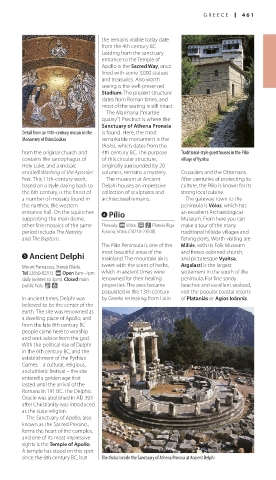
quarry”) Precinct is where the
Sanctuary of Athena Pronaia
Detail from an 11th-century mosaic in the is found. Here, the most
Monastery of Osios Loúkas remarkable monument is the
tholos, which dates from the
from the original church and 4th century BC. The purpose Traditional-style guesthouses in the Pílio
contains the sarcophagus of of this circular structure, village of Vyzítsa
Holy Luke, and a mosaic originally surrounded by 20
entitled Washing of the Apostles’ columns, remains a mystery. Crusaders and the Ottomans.
Feet. This 11th-century work, The museum at Ancient After centuries of protecting its
based on a style dating back to Delphi houses an impressive culture, the Pílio is known for its
the 6th century, is the finest of collection of sculptures and strong local cuisine.
a number of mosaics found in architectural remains. The gateway town to the
the narthex, the western peninsula is Vólos, which has
entrance hall. On the squinches 6 Pílio an excellent Archaeological
supporting the main dome, Museum. From here you can
other fine mosaics of the same Thessaly. @ Vólos. £ n Plateía Riga make a tour of the many
period include The Nativity Feraíou, Vólos (24210-23500). traditional hillside villages and
and The Baptism. fishing ports. Worth visiting are
The Pilio Peninsula is one of the Miliés, with its Folk Museum
5 Ancient Delphi most beautiful areas of the and fresco-adorned church,
mainland. The mountain air is
and picturesque Vyzítsa.
Mount Parnassus, Stereá Elláda. sweet with the scent of herbs, Argalastí is the largest
Tel 22650-82313. @ Open 8am–7pm which in ancient times were settlement in the south of the
daily (winter: to 3pm). Closed main renowned for their healing peninsula. For fine sandy
public hols. & 7 properties. The area became beaches and excellent seafood,
populated in the 13th century visit the popular coastal resorts
In ancient times, Delphi was by Greeks retreating from Latin of Plataniás or Agios Ioánnis.
believed to be the center of the
earth. The site was renowned as
a dwelling place of Apollo, and
from the late 8th century BC
people came here to worship
and seek advice from the god.
With the political rise of Delphi
in the 6th century BC, and the
establishment of the Pythian
Games – a cultural, religious,
and athletic festival – the site
entered a golden age that
lasted until the arrival of the
Romans in 191 BC. The Delphic
Oracle was abolished in AD 393
after Christianity was introduced
as the state religion.
The Sanctuary of Apollo, also
known as the Sacred Precinct,
forms the heart of the complex,
and one of its most impressive
sights is the Temple of Apollo.
A temple has stood on this spot
since the 6th century BC, but The tholos beside the Sanctuary of Athena Pronaia at Ancient Delphi
460-461_EW_Europe.indd 461 14/07/16 10:17 am

