


Page 42 - BBC Wildlife Volume 36 #05
P. 42
CURLEWS


                                                                         CONCERN FOR CURLEWS:
                                                                         A THREATENED FAMILY


                                                                         Out of the eight species  between Siberia and the
                                                                         of curlew worldwide, two  Mediterranean and was
                                                                         may already be extinct.  also heavily hunted. It has
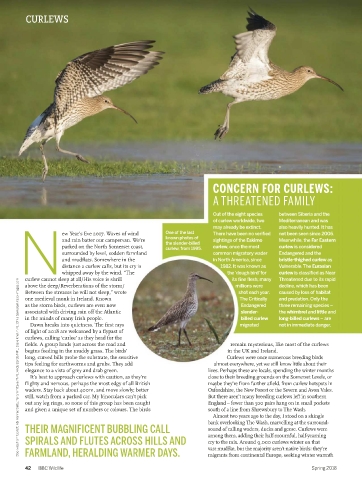
                      ew Year’s Eve 2017. Waves of wind  One of the last  There have been no verified  not been seen since 2006.
                                                         known photos of
                      and rain batter our campervan. We’re               sightings of the Eskimo  Meanwhile, the Far Eastern
                                                         the slender-billed
                      parked on the North Somerset coast,  curlew, from 1995.   curlew, once the most  curlew is considered
                      surrounded by level, sodden farmland               common migratory wader  Endangered and the
                      and mudflats. Somewhere in the                      in North America, since  bristle-thighed curlew as
                      distance a curlew calls, but its cry is               1982. It was known as  Vulnerable.The Eurasian
        Nwhipped away by the wind. “The                                       the‘dough bird’for  curlew is classified as Near
          curlew cannot sleep at all/His voice is shrill                       its fine flesh; many  Threatened due to its rapid
       Clockwise from top left: Abi Warner/Getty; Terry Whittaker/NPL; Andy Sands/NPL; Steve Knell/NPL; Chris Gomersall/rspb-images.com
          above the deep/Reverberations of the storm/                            millions were  decline, which has been
          Between the streams he will not sleep,” wrote                           shot each year.  caused by loss of habitat
          one medieval monk in Ireland. Known                                     The Critically  and predation. Only the
          as the storm birds, curlews are even now                                Endangered   three remaining species –
          associated with driving rain off the Atlantic                           slender-     the whimbrel and little and
          in the minds of many Irish people.                                      billed curlew   long-billed curlews – are
           Dawn breaks into quietness. The first rays                              migrated     not in immediate danger.
          of light of 2018 are welcomed by a flypast of
          curlews, calling ‘curlee’ as they head for the
          fields. A group lands just across the road and                        remain mysterious, like most of the curlews
          begins feeding in the muddy grass. The birds’                       in the UK and Ireland.
          long, curved bills probe the substrate, the sensitive               Curlews were once numerous breeding birds
          tips feeling for earthworms and grubs. They add                almost everywhere, yet we still know little about their
          elegance to a vista of grey and drab green.                  lives. Perhaps these are locals, spending the winter months
           It’s best to approach curlews with caution, as they’re      close to their breeding grounds on the Somerset Levels, or
          flighty and nervous, perhaps the most edgy of all British     maybe they’re from further afield, from curlew hotspots in
          waders. Stay back about 400m, and move slowly; better        Oxfordshire, the New Forest or the Severn and Avon Vales.
          still, watch from a parked car. My binoculars can’t pick     But there aren’t many breeding curlews left in southern
          out any leg rings, so none of this group has been caught     England – fewer than 300 pairs hang on in small pockets
          and given a unique set of numbers or colours. The birds      south of a line from Shrewsbury to The Wash.
                                                                         Almost two years ago to the day, I stood on a shingle
                                                                       bank overlooking The Wash, marvelling at the surround-
          THEIR MAGNIFICENT BUBBLING CALL                              sound of calling waders, ducks and geese. Curlews were
                                                                       among them, adding their half-mournful, half-yearning
          SPIRALS AND FLUTES ACROSS HILLS AND                          cry to the mix. Around 9,000 curlews winter on that
          FARMLAND, HERALDING WARMER DAYS.                             vast mudflat, but the majority aren’t native birds: they’re
                                                                       migrants from continental Europe, seeking winter warmth
          42  BBC Wildlife                                                                                Spring 2018

