


Page 11 - The Complete Cat Breed Book (DK)
P. 11
WHA T IS A C A T?        9

         humans attracted, and the humans gained a much-
         appreciated form of pest control that lived alongside
         them in their towns and villages.
           Wild species of cats are naturally wary of humans, but
         over time natural selection favored those cats that were
         least scared of people and adaptable enough to change from
         being solitary hunters to living in close proximity to humans
         and other cats. By around 2000  BCE the cat had become fully
         domesticated and was living in the homes of the Ancient
         Egyptians as a much-loved pet that also kept rodents under
         control. From Egypt the domestic cat would eventually
         spread to homes in nations around the world.

         Cat breeds
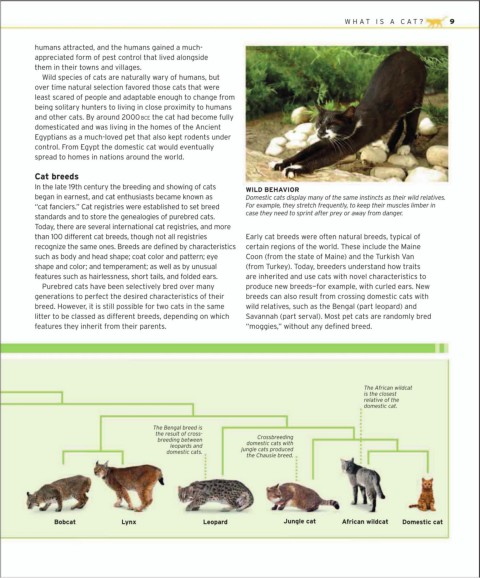
         In the late 19th century the breeding and showing of cats   WILD BEHAVIOR
         began in earnest, and cat enthusiasts became known as    Domestic cats display many of the same instincts as their wild relatives.
         “cat fanciers.” Cat registries were established to set breed   For example, they stretch frequently, to keep their muscles limber in
                                                          case they need to sprint after prey or away from danger.
         standards and to store the genealogies of purebred cats.
         Today, there are several international cat registries, and more
         than 100 different cat breeds, though not all registries   Early cat breeds were often natural breeds, typical of
         recognize the same ones. Breeds are defined by characteristics   certain regions of the world. These include the Maine
         such as body and head shape; coat color and pattern; eye   Coon (from the state of Maine) and the Turkish Van
         shape and color; and temperament; as well as by unusual   (from Turkey). Today, breeders understand how traits
         features such as hairlessness, short tails, and folded ears.   are inherited and use cats with novel characteristics to
           Purebred cats have been selectively bred over many   produce new breeds—for example, with curled ears. New
         generations to perfect the desired characteristics of their   breeds can also result from crossing domestic cats with
         breed. However, it is still possible for two cats in the same   wild relatives, such as the Bengal (part leopard) and
         litter to be classed as different breeds, depending on which   Savannah (part serval). Most pet cats are randomly bred
         features they inherit from their parents.        “moggies,” without any defined breed.


                                                                                     The African wildcat
                                                                                     is the closest
                                                                                     relative of the
                                                                                     domestic cat.
                                    The Bengal breed is
                                     the result of cross-   Crossbreeding
                                     breeding between     domestic cats with
                                        leopards and     jungle cats produced
                                       domestic cats.
                                                          the Chausie breed.


             Bobcat          Lynx               Leopard           Jungle cat    African wildcat  Domestic cat

