


Page 26 - All About History - Issue 180-19
P. 26
MONGOL EMPIRE


                  Historical Treasures


          A PAIZA                                                                                                                                       TRAVEL


                                                                                                                                                        FRIENDLY
                                                                                                                                                        A paiza made
                                                                                                                                                        from cast iron like
                                                                                                                                                        this one would
          THE ANCESTOR OF THE MODERN PASSPORT CHINA, 13TH CENTURY                                                                                       have been very
                                                                                                                                                        heavy; however,
                                                                                                                                                        the ring on the
                                                                                                                                                        top meant that it
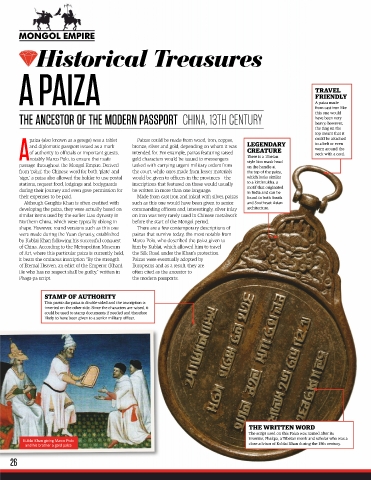
               paiza (also known as a gerege) was a tablet         Paizas could be made from wood, iron, copper,                                        could be attached
                                                                                                                        LEGENDARY                       to a belt or even
               and diplomatic passport issued as a mark          bronze, silver and gold, depending on whom it was
                                                                                                                        CREATURE                        worn around the
               of authority to officials or important guests,    intended for. For example, paizas featuring raised                                     neck with a cord.
                                                                                                                        There is a Tibetan
          Anotably Marco Polo, to ensure their safe              gold characters would be issued to messengers
                                                                                                                        style lion mask head
          passage throughout the Mongol Empire. Derived          tasked with carrying urgent military orders from       on the handle at
          from ‘páizi’, the Chinese word for both ‘plate’ and    the court, while ones made from lesser materials       the top of the paiza,
          ‘sign,’ a paiza also allowed the holder to use postal   would be given to officers in the provinces – the     which looks similar
                                                                                                                        to a kirtimukha, a
          stations, request food, lodgings and bodyguards        inscriptions that featured on these would usually
                                                                                                                        motif that originated
          during their journey and even gave permission for      be written in more than one language.
                                                                                                                        in India and can be
          their expenses to be paid.                               Made from cast iron and inlaid with silver, paizas   found in both South
             Although Genghis Khan is often credited with        such as this one would have been given to senior       and Southeast Asian
          developing the paiza, they were actually based on      commanding officers and, interestingly, silver inlay   architecture.
          similar items used by the earlier Liao dynasty in      on iron was very rarely used in Chinese metalwork
          Northern China, which were typically oblong in         before the start of the Mongol period.
          shape. However, round versions such as this one          There are a few contemporary descriptions of
          were made during the Yuan dynasty, established         paizas that survive today, the most notable from
          by Kublai Khan following his successful conquest       Marco Polo, who described the paiza given to
          of China. According to the Metropolitan Museum         him by Kublai, which allowed him to travel
          of Art, where this particular paiza is currently held,   the Silk Road under the Khan’s protection.
          it bears the ominous inscription “By the strength      Paizas were eventually adopted by
          of Eternal Heaven, an edict of the Emperor (Khan).     Europeans and as a result, they are
          He who has no respect shall be guilty,” written in     often cited as the ancestor to
          Phags-pa script.                                       the modern passports.


                      STAMP OF AUTHORITY
                      This particular paiza is double-sided and the inscription is
                      inverted on the other side. Since the characters are raised, it
                      could be used to stamp documents if needed and therefore
                      likely to have been given to a senior military officer.


                                                                                                                        THE WRITTEN WORD
                                                                                                                        The script used on this Paiza was named after its
                                                                                                                        inventor, Phakpa, a Tibetan monk and scholar who was a
            Kublai Khan giving Marco Polo
             and his brother a gold paiza                                                                               close advisor of Kublai Khan during the 13th century.

      26

