


Page 121 - (DK Eyewitness) Travel Guide - Tokyo
P. 121
WHERE T O EA T AND DRINK 119
Vegetarian Food on a hotplate with a rich
Although traditional Japanese demi-glace gravy sauce on
cuisine includes plenty of top. Most family restaurants
vegetables and high-protein are large national chains, for
soyfoods such as tofu and natto example Volks or Gasuto, and
(fermented soybeans), it is not a have very reasonably priced
vegetarian’s paradise, as most beer and wine.
dishes are cooked in a fish- At the high end, Tokyo boasts
based stock (dashi). However, French and Italian cuisine to
shojin ryori restaurants tend to rival the finest in Europe and
use kelp and mushroom stock North America. There are also
instead. Shojin ryori, which numerous budget bistros and
literally means “devotion food,” trattorias of remarkable
developed along with Zen authenticity. Spanish food is
Buddhism in the 12th century catching on fast, and German-
and is a type of vegetarian style food can be found in
temple food. Meals can range beer halls, which are popular
from elaborate – and just as places to drink. The British Isles
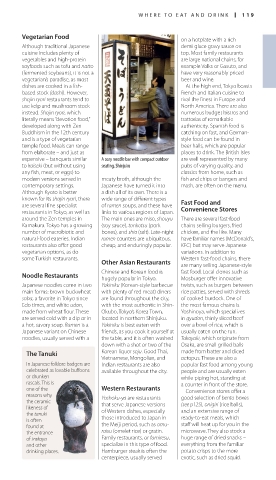
expensive – banquets similar A cozy noodle bar with compact outdoor are well represented by many
to kaiseki (but without using seating, Shinjuku pubs of varying quality, and
any fish, meat, or eggs) to classics from home, such as
modern versions served in meaty broth, although the fish and chips or bangers and
contemporary settings. Japanese have turned it into mash, are often on the menu.
Although Kyoto is better a dish all of its own. There is a
known for its shojin ryori, there wide range of different types
are several fine specialist of ramen soups, and these have Fast Food and
Convenience Stores
restaurants in Tokyo, as well as links to various regions of Japan.
around the Zen temples in The main ones are miso, shouyu There are several fast-food
Kamakura. Tokyo has a growing (soy sauce), tonkotsu (pork chains selling burgers, fried
number of macrobiotic and bones), and shio (salt). Late-night chicken, and the like. Many
natural-food eateries. Indian ramen counters are ubiquitous, have familiar names (McDonald’s,
restaurants also offer good cheap, and enduringly popular. KFC) but may serve Japanese
vegetarian options, as do variations. In addition to
some Turkish restaurants. Western fast-food chains, there
Other Asian Restaurants are many selling Japanese-style
Chinese and Korean food is fast food. Local clones such as
Noodle Restaurants hugely popular in Tokyo. Mosburger offer innovative
Japanese noodles come in two Yakiniku (Korean-style barbecue twists, such as burgers between
main forms: brown buckwheat with plenty of red meat) diners rice patties, served with shreds
soba, a favorite in Tokyo since are found throughout the city, of cooked burdock. One of
Edo times, and white udon, with the most authentic in Shin- the most famous chains is
made from wheat flour. These Okubo, Tokyo’s Korea Town, Yoshinoya, which specializes
are served cold with a dip or in located in northern Shinjuku. in gyudon, thinly sliced beef
a hot, savory soup. Ramen is a Yakiniku is best eaten with over a bowl of rice, which is
Japanese variant on Chinese friends, as you cook it yourself at usually eaten on the run.
noodles, usually served with a the table, and it is often washed Takoyaki, which originate from
down with a shot or two of the Osaka, are small grilled balls
The Tanuki Korean liquor soju. Good Thai, made from batter and diced
Vietnamese, Mongolian, and octopus. These are also a
In Japanese folklore bad gers are Indian restaurants are also popular fast food among young
celebrat ed as lovable buffoons available throughout the city. people and are usually eaten
or drunken while piping hot, standing at
rascals. This is a counter in front of the store.
one of the Western Restaurants Convenience stores offer a
reasons why Yoshoku-ya are restaurants good selection of bento boxes
the ceramic that serve Japanese versions (see p125), onigiri (rice balls),
likeness of of Western dishes, especially and an extensive range of
the tanuki
is often those introduced to Japan in ready-to-eat meals, which
found at the Meiji period, such as omu- staff will heat up for you in the
the entrance raisu (omelet rice) or gratin. microwave. They also stock a
of iza kaya Family restaurants, or famiresu, huge range of dried snacks –
and other specialize in this type of food. everything from the familiar
drinking places. Hamburger steak is often the potato crisps to the more
centerpiece, usually served exotic, such as dried squid.
118-119_EW_Tokyo.indd 119 12/09/16 11:28 am

