


Page 125 - (DK Eyewitness) Travel Guide - Tokyo
P. 125
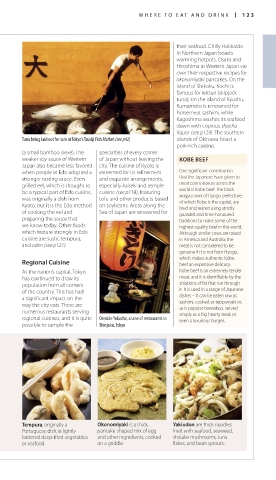
122 TR A VELERS ’ NEEDS WHERE T O EA T AND DRINK 123
The Flavors of Japan their seafood. Chilly Hokkaido
in Northern Japan boasts
warming hotpots. Osaka and
Hiroshima in Western Japan vie
over their respective recipes for
okono miyaki pancakes. On the
island of Shikoku, Kochi is
famous for katsuo (skipjack
tuna); on the island of Kyushu,
Kumamoto is renowned for
horsemeat sashimi, while
Kagoshima washes its seafood
down with copious shochu
liquor (see p129). The southern
Tuna being laid out for sale at Tokyo’s Tsukiji Fish Market (see p42) islands of Okinawa boast a
residents since the late 17th pork-rich cuisine.
century and is renow ned as (a small bamboo sieve). The specialties of every corner
one of the true tastes of Edo weaker soy sauce of Western of Japan without leaving the KOBE BEEF
cuisine. As more people from Japan also became less favored city. The cuisine of Kyoto is
the north of Japan moved to when people in Edo adopted a esteemed for its refinement One significant contribution
Edo, udon noodles, which were stronger tasting sauce. Even and exquisite arrangements, that the Japanese have given to
popular in the south, were grilled eel, which is thought to especially kaiseki and temple meat connoisseurs across the
replaced by soba noodles. Soba be a typical part of Edo cuisine, cuisine (see p118), featuring world is Kobe beef. The black
wagyu cows of Hyogo prefecture,
is most commonly eaten in the was originally a dish from tofu and other products based of which Kobe is the capital, are
same simple way that it was Kyoto, but it is the Edo method on soybeans. Areas along the bred and reared using strictly
eaten in the past: in a zaru of cooking the eel and Sea of Japan are renowned for guarded and time-honoured
preparing the sauce that traditions to make some of the
we know today. Other foods highest-quality beef in the world.
which feature strongly in Edo Although similar cows are raised
Enoki mushrooms cuisine are sushi, tempura, in America and Australia, the
and oden (see p121). meat is not considered to be
genuine if it is not from Hyogo,
which makes authentic Kobe
Regional Cuisine beef an expensive delicacy.
As the nation’s capital, Tokyo Kobe beef is an extremely tender
has continued to draw its meat, and it is identifiable by the
population from all corners striations of fat that run through
of the country. This has had it. It is used in a range of Japanese
a significant impact on the dishes – it can be eaten raw as
sashimi, cooked as teppanyaki or,
way the city eats. There are as is popular nowadays, served
numer ous restaurants serving simply as a big hearty steak or
regional cuisines, and it is quite Omoide Yokacho, a lane of restaurants in even a luxurious burger.
Selection of vegetables that feature in Japanese cuisine possible to sample the Shinjuku, Tokyo
Unadon, featuring grilled eel Tempura, originally a Okonomiyaki is a thick, Yakiudon are thick noodles
over a bed of rice, is popular Portuguese dish, is lightly pancake-shaped mix of egg fried with seafood, seaweed,
as it is thought to have great battered deep-fried vegetables and other ingredients, cooked shiitake mushrooms, tuna
health benefits. or seafood. on a griddle. flakes, and bean sprouts.
122-123_EW_Tokyo.indd 123 12/09/16 11:28 am

