


Page 60 - (DK Eyewitness) Travel Guide - Tokyo
P. 60
58 T OK Y O AREA B Y AREA
8 Senso-ji Temple
Sensoji Temple
Popularly known as Asakusa Kannon, this is Tokyo’s most sacred and
spectacular temple. In AD 628, two fishermen dragged a small gold
statue of Kannon, the Buddhist goddess of mercy, from the Sumida
River. Their master built a shrine to Kannon, then in 645, the holy man
Shokai built a temple to her. Its fame, wealth, and size grew until
Tokugawa Ieyasu bestowed upon it a large stipend of land. The
Yoshiwara pleasure quarter moved nearby in 1657 only increas ing
its popularity. The temple survived the 1923 earth quake but not
World War II bombing. Its main buildings are therefore relative ly
new, but follow the Edo-era layout. Though the buildings are
impressive, it is the people following their daily rituals that
make this place so special.
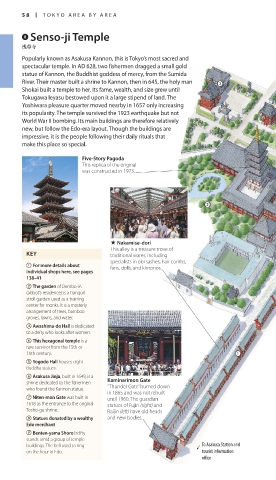
Five-Story Pagoda
This replica of the original
was con structed in 1973.
. Nakamise-dori
This alley is a treasure trove of
KEY traditional wares, including
specialists in obi sashes, hair combs,
1 For more details about fans, dolls, and kimonos.
individual shops here, see pages
138–41
2 The garden of Dembo-in
(abbot’s residence) is a tranquil
stroll garden used as a training
center for monks. It is a masterly
arrangement of trees, bamboo
groves, lawns, and water.
3 Awashima-do Hall is dedicated
to a deity who looks after women.
4 This hexagonal temple is a
rare survivor from the 15th or
16th century.
5 Yogodo Hall houses eight
Buddha statues.
6 Asakusa Jinja, built in 1649, is a
shrine dedicated to the fishermen Kaminarimon Gate
who found the Kannon statue. “Thunder Gate” burned down
in 1865 and was not rebuilt
7 Niten-mon Gate was built in until 1960. The guardian
1618 as the entrance to the original statues of Fujin (right) and
Tosho-gu shrine. Raijin (left) have old heads
8 Statues donated by a wealthy and new bodies.
Edo merchant
9 Benten-yama Shoro belfry
stands amid a group of temple
buildings. The bell used to ring To Asakusa Station and
on the hour in Edo. tourist information
office
058-059_EW_Tokyo.indd 58 12/09/16 11:23 am

