


Page 69 - Amphibian
P. 69
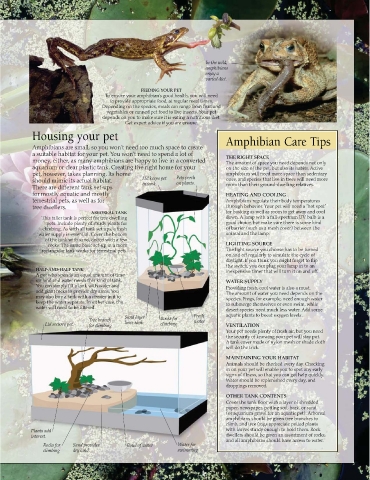
In the wild,
amphibians
enjoy a
varied diet.
FEEDING YOUR PET
To ensure your amphibian’s good health, you will need
to provide appropriate food, at regular meal times.
Depending on the species, meals can range from fruit and
vegetables or canned pet food to live insects. Your pet
depends on you to make sure it is eating a nutritious diet.
Get expert advice if you are unsure.
Housing your pet
Amphibians are small, so you won’t need too much space to create Amphibian Care Tips
a suitable habitat for your pet. You won’t need to spend a lot of THE RIGHT SPACE
money, either, as many amphibians are happy to live in a converted The amount of space you need depends not only
aquarium or clear plastic tank. Creating the right home for your on the size of the pet, but also its habits. Active
pet, however, takes planning. Its home amphibians will need more space than sedentary
should mimic its actual habitat. Lid keeps pet Pets perch ones, and species that live in trees will need more
on plants.
in tank.
There are different tank set-ups room than their ground-dwelling relatives.
for mostly aquatic and mostly HEATING AND COOLING
terrestrial pets, as well as for Amphibians regulate their body temperatures
tree dwellers. through behavior. Your pet will need a “hot spot”
ARBOREAL TANK for basking as well as room to get away and cool
This taller tank is perfect for tree dwelling down. A lamp with a full-spectrum UV bulb is a
pets. Include plenty of sturdy plants for good choice, but make sure there is some kind
climbing. As with all tank set-ups, a fresh of barrier (such as a mesh cover) between the
water supply is essential. Cover the bottom animal and the lamp.
of the tank with sand, dotted with a few
rocks. The same basic set-up in a more LIGHTING SOURCE
rectangular tank works for terrestrial pets. The light source you choose has to be turned
on and off regularly to simulate the cycle of
daylight. If you think you might forget to flip
the switch, you can plug your lamp in to an
HALFANDHALF TANK inexpensive timer that will turn it on and off.
A pet who spends an equal amount of time
on land and water needs this kind of tank. WATER SUPPLY
You can simply fill a tank with water and Providing fresh, cool water is also a must.
add giant rocks to provide dry areas. You The amount of water you need depends on the
may also buy a tank with a divider in it to species. Frogs, for example, need enough water
keep the water separate. In either case, the to submerge themselves or even swim, while
water will need to be filtered.
desert species need much less water. Add some
Sand layer Fresh aquatic plants to boost oxygen levels.
Tree branch Rocks for water
Lid secures pet. for climbing lines tank. climbing VENTILATION
Your pet needs plenty of fresh air, but you need
the security of knowing your pet will stay put.
A tank cover made of nylon mesh or shade cloth
will do the trick.
MAINTAINING YOUR HABITAT
Animals should be checked every day. Checking
in on your pet will enable you to spot any early
signs of illness, so that you can get help quickly.
Water should be replenished every day, and
droppings removed.
OTHER TANK CONTENTS
Cover the tank floor with a layer of shredded
paper, newspaper, potting soil, bark, or sand
(or aquarium gravel for an aquatic pet). Arboreal
amphibians should be given tree branches to
climb, and tree frogs appreciate potted plants
Plants add with leaves sturdy enough to hold them. Rock
interest. dwellers should be given an assortment of rocks,
and all amphibians should have access to water.
Rocks for Sand provides Bowl of water Water for
climbing dry land. swimming
67

