


Page 143 - World of Animals - Book of Sharks & Ocean Predators
P. 143
Polar bears
                               WorldMags.net


                                                                                                         POLAR BEAR
                                                                                                         Ursus maritimus
                                                                                                         Class Mammalia


                                                                                                         Territory Arctic Circle
                                                                                                         Diet Seals
                                                                                                         Lifespan 25-30 years
                                                                                                         Adult weight 410-720kg /
                                                                                                         900-1,600lbs
                                                                                                         Conservation Status

                                                                                                         VULNERABLE


          Dangers of growing up in the Arctic

          It’s a tough job being a polar bear cub, with a plethora of Arctic obstacles to
          overcome. Cubs rely on their mother and instinct to help them survive

                                                                                                      Life at sub-zero
                                                                                                      Cubs are born in November
                                                                                                      and December, and Arctic
                                                                                                      winter temperatures can
                                                                                                      drop to −50°C/−58°F. For a
                                                                                                      very little bear that’s a chilly
                                                                                                      start to life! Luckily, the snow
                                                                                                      den that the mother builds
                                                                                                      is insulated, creating a snug
                                                                                                      haven for cub development.


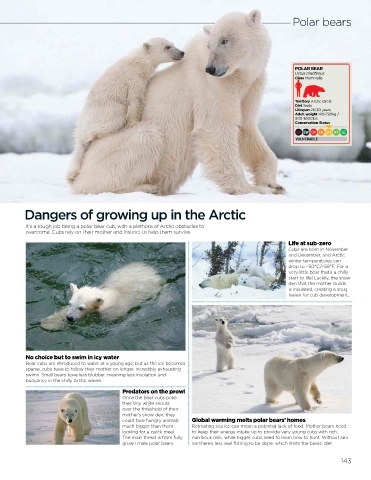
          No choice but to swim in icy water
          Bear cubs are introduced to water at a young age, but as the ice becomes
          sparse, cubs have to follow their mother on longer, incredibly exhausting
          swims. Small bears have less blubber, meaning less insulation and
          buoyancy in the chilly Arctic waves.
                                            Predators on the prowl
                                            Once the bear cubs poke
                                            their tiny white snouts
                                            over the threshold of their
                                            mother’s snow den, they
                                            could face hungry animals   Global warming melts polar bears’ homes
                                            much bigger than them   Retreating sea ice can mean a potential lack of food. Mother bears need
                                            looking for a quick meal.   to keep their energy intake up to provide very young cubs with rich,
                                            The main threat is from fully   nutritious milk, while bigger cubs need to learn how to hunt. Without sea
                                            grown male polar bears.  ice there’s less seal fishing to be done, which limits the bears’ diet.

                                                                                                                         143
                                                      WorldMags.net
                                                      WorldMags.net

