


Page 103 - (DK) Home Doctor: Providing practical advice on home treatments
P. 103
COMMON CONDITIONS   101


         CHEST AND ABDOMINAL PROBLEMS


         Hiccups


              Everyone has an occasional bout of hiccups – short, sharp intakes of air caused by repeated, involuntary
              spasms of your diaphragm. Although they often occur for no apparent reason, common causes include
              overeating or eating too fast; eating spicy, very hot, or very cold food; drinking carbonated drinks; or drinking
              alcohol. Smoking heavily, or emotional factors such as nervousness or shock, can bring on an attack of hiccups, as
              can a sudden change in temperature. Hiccups usually last for no more than a few minutes. Bouts that last
              more than a few days can be a sign of illness, and may also lead to difficulty in sleeping and weight loss.


         What you can do yourself
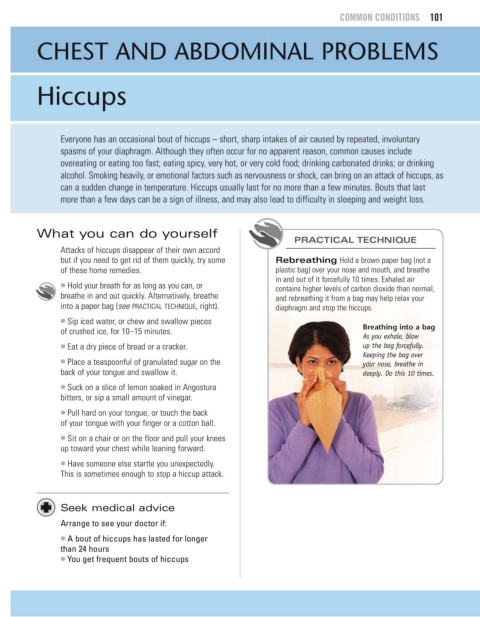
                                                                 PRACTICAL TECHNIQUE
              Attacks of hiccups disappear of their own accord
              but if you need to get rid of them quickly, try some  Rebreathing Hold a brown paper bag (not a
              of these home remedies.                       plastic bag) over your nose and mouth, and breathe
                                                            in and out of it forcefully 10 times. Exhaled air
              ● Hold your breath for as long as you can, or
                                                            contains higher levels of carbon dioxide than normal,
              breathe in and out quickly. Alternatively, breathe  and rebreathing it from a bag may help relax your
              into a paper bag (see PRACTICAL TECHNIQUE, right).  diaphragm and stop the hiccups.
              ● Sip iced water, or chew and swallow pieces
                                                                               Breathing into a bag
              of crushed ice, for 10–15 minutes.
                                                                               As you exhale, blow
              ● Eat a dry piece of bread or a cracker.                         up the bag forcefully.
                                                                               Keeping the bag over
              ● Place a teaspoonful of granulated sugar on the
                                                                               your nose, breathe in
              back of your tongue and swallow it.                              deeply. Do this 10 times.
              ● Suck on a slice of lemon soaked in Angostura
              bitters, or sip a small amount of vinegar.
              ● Pull hard on your tongue, or touch the back
              of your tongue with your finger or a cotton ball.
              ● Sit on a chair or on the floor and pull your knees
              up toward your chest while leaning forward.
              ● Have someone else startle you unexpectedly.
              This is sometimes enough to stop a hiccup attack.


              Seek medical advice
              Arrange to see your doctor if:
              ● A bout of hiccups has lasted for longer
              than 24 hours
              ● You get frequent bouts of hiccups

