


Page 42 - (DK) Home Doctor: Providing practical advice on home treatments
P. 42
40   COMMON CONDITIONS: SKIN, HAIR, AND NAIL PROBLEMS

         Rosacea


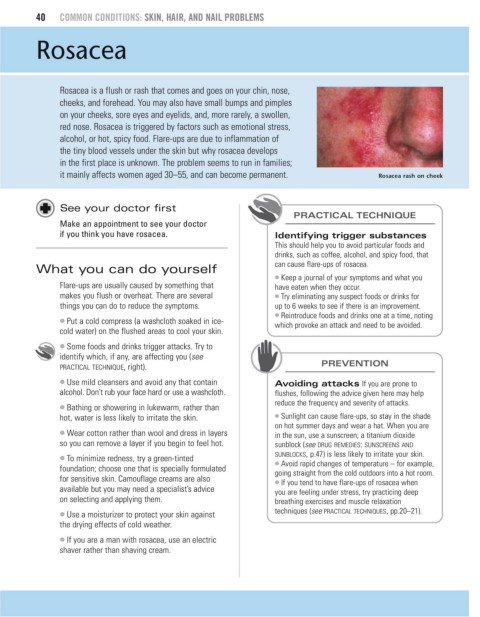
              Rosacea is a flush or rash that comes and goes on your chin, nose,
              cheeks, and forehead. You may also have small bumps and pimples
              on your cheeks, sore eyes and eyelids, and, more rarely, a swollen,
              red nose. Rosacea is triggered by factors such as emotional stress,
              alcohol, or hot, spicy food. Flare-ups are due to inflammation of
              the tiny blood vessels under the skin but why rosacea develops
              in the first place is unknown. The problem seems to run in families;
              it mainly affects women aged 30–55, and can become permanent.        Rosacea rash on cheek


              See your doctor first
                                                                PRACTICAL TECHNIQUE
              Make an appointment to see your doctor
              if you think you have rosacea.                Identifying trigger substances
                                                            This should help you to avoid particular foods and
                                                            drinks, such as coffee, alcohol, and spicy food, that
         What you can do yourself                           can cause flare-ups of rosacea.
                                                            ● Keep a journal of your symptoms and what you
              Flare-ups are usually caused by something that  have eaten when they occur.
              makes you flush or overheat. There are several  ● Try eliminating any suspect foods or drinks for
              things you can do to reduce the symptoms.     up to 6 weeks to see if there is an improvement.
                                                            ● Reintroduce foods and drinks one at a time, noting
              ● Put a cold compress (a washcloth soaked in ice-
                                                            which provoke an attack and need to be avoided.
              cold water) on the flushed areas to cool your skin.
              ● Some foods and drinks trigger attacks. Try to
              identify which, if any, are affecting you (see
              PRACTICAL TECHNIQUE, right).                            PREVENTION
              ● Use mild cleansers and avoid any that contain  Avoiding attacks If you are prone to
              alcohol. Don’t rub your face hard or use a washcloth.  flushes, following the advice given here may help
                                                            reduce the frequency and severity of attacks.
              ● Bathing or showering in lukewarm, rather than
              hot, water is less likely to irritate the skin.  ● Sunlight can cause flare-ups, so stay in the shade
                                                            on hot summer days and wear a hat. When you are
              ● Wear cotton rather than wool and dress in layers
                                                            in the sun, use a sunscreen; a titanium dioxide
              so you can remove a layer if you begin to feel hot.   sunblock (see DRUG REMEDIES: SUNSCREENS AND
                                                            SUNBLOCKS, p.47) is less likely to irritate your skin.
              ● To minimize redness, try a green-tinted
                                                            ● Avoid rapid changes of temperature – for example,
              foundation; choose one that is specially formulated  going straight from the cold outdoors into a hot room.
              for sensitive skin. Camouflage creams are also
                                                            ● If you tend to have flare-ups of rosacea when
              available but you may need a specialist’s advice   you are feeling under stress, try practicing deep
              on selecting and applying them.               breathing exercises and muscle relaxation
              ● Use a moisturizer to protect your skin against   techniques (see PRACTICAL TECHNIQUES, pp.20–21).
              the drying effects of cold weather.
              ● If you are a man with rosacea, use an electric
              shaver rather than shaving cream.

