


Page 86 - (DK) Home Doctor: Providing practical advice on home treatments
P. 86
84   COMMON CONDITIONS: MOUTH, NOSE, AND THROAT PROBLEMS

         Snoring


              Snoring is the sound of the soft palate (the back of the roof of the mouth) vibrating when it relaxes during
              sleep. Although it does no harm in itself, it can disturb the snorer and anyone who shares the same bed or
              room. Snoring can be provoked by conditions that cause swelling in the nasal and throat passages, such as
              hay fever, colds, and throat or sinus infections, as well as combinations of lifestyle factors such as drinking
              alcohol, being overweight, and smoking. More men than women snore, and the tendency to do so increases
              from middle age onward. In children, it is often due to enlarged tonsils and adenoids.


              See your doctor first
                                                                PRACTICAL TECHNIQUE
              Make an appointment to see your doctor
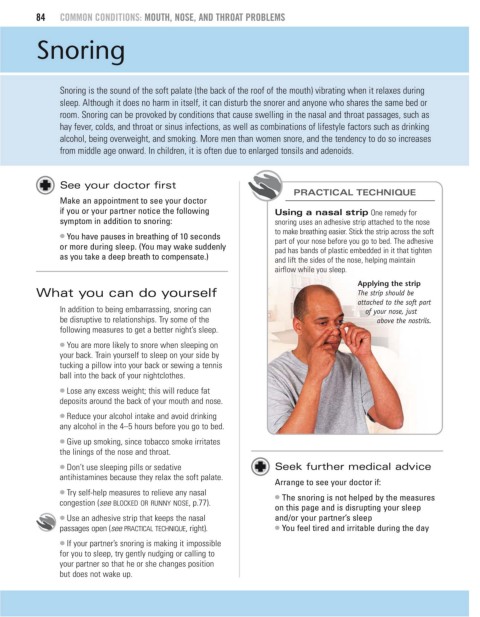
              if you or your partner notice the following   Using a nasal strip One remedy for
              symptom in addition to snoring:               snoring uses an adhesive strip attached to the nose
                                                            to make breathing easier. Stick the strip across the soft
              ● You have pauses in breathing of 10 seconds
                                                            part of your nose before you go to bed. The adhesive
              or more during sleep. (You may wake suddenly
                                                            pad has bands of plastic embedded in it that tighten
              as you take a deep breath to compensate.)     and lift the sides of the nose, helping maintain
                                                            airflow while you sleep.
                                                                              Applying the strip
         What you can do yourself                                             The strip should be
                                                                              attached to the soft part
              In addition to being embarrassing, snoring can                    of your nose, just
              be disruptive to relationships. Try some of the                     above the nostrils.
              following measures to get a better night’s sleep.
              ● You are more likely to snore when sleeping on
              your back. Train yourself to sleep on your side by
              tucking a pillow into your back or sewing a tennis
              ball into the back of your nightclothes.
              ● Lose any excess weight; this will reduce fat
              deposits around the back of your mouth and nose.
              ● Reduce your alcohol intake and avoid drinking
              any alcohol in the 4–5 hours before you go to bed.
              ● Give up smoking, since tobacco smoke irritates
              the linings of the nose and throat.

              ● Don’t use sleeping pills or sedative        Seek further medical advice
              antihistamines because they relax the soft palate.
                                                            Arrange to see your doctor if:
              ● Try self-help measures to relieve any nasal
                                                            ● The snoring is not helped by the measures
              congestion (see BLOCKED OR RUNNY NOSE, p.77).
                                                            on this page and is disrupting your sleep
              ● Use an adhesive strip that keeps the nasal  and/or your partner’s sleep
              passages open (see PRACTICAL TECHNIQUE, right).  ● You feel tired and irritable during the day
              ● If your partner’s snoring is making it impossible
              for you to sleep, try gently nudging or calling to
              your partner so that he or she changes position
              but does not wake up.

