


Page 83 - World of Animals - Issue #33
P. 83
Protecting stars
of the savannah
Samuel Mutisya is the Wildlife
Manager at Ol Pejeta, home to the
last male northern white rhino
What is a rhino’s role in the savannah ecosystem?
The rhino is considered an apex consumer because
they have no predators and the majority tend
10% of World of Animals’ profits to survive to maturity. A single rhino consumes
go directly to rhino conservation hundreds of kilograms of plant material per day and
Follow the campaign and help save rhinos is therefore responsible for controlling the general
now at www.animalanswers.co.uk growth and persistence of plant species in the
savannah. This is important for other wildlife species
that prefer short and well maintained grasslands
to thrive. The continuous hammering of vegetation
keeps bush encroachment in check and also
maintains a diverse and dynamic plant life.
Why is rhino conservation important?
The rhino population in Kenya suffered decline in the
excess of 90 per cent between the 70s and 90s. This
decline led to small, scattered and vulnerable rhino
populations that were unviable. The consolidation
of the remnant populations into highly protected
sanctuaries such as the Ol Pejeta Conservancy
provided a refuge for the species and an opportunity
for the rhinos to meet and mate. However, the recent
surge in poaching threatens to undo these gains.
Kenya aims to conserve at least 2,000 black rhinos in
the wild and with the current population of 678, it still
is 66 per cent below target. Conservation of the rhino
is therefore absolutely critical in saving the species
from extinction.
How can poachers be stopped from killing rhinos?
Poaching is an organised crime that is dynamic
in nature and that requires multiple deterrence
mechanisms. If poaching is to be stopped, the illegal
demand for horn has to be addressed. This can be
achieved in many ways. The first one is reaching
destination markets to discourage use of horn
products and introducing stringent penalties. We
need highly trained motivated and well-equipped
anti-poaching units, and advanced surveillance
technology that pre-empts poacher incursions.
What is currently being actioned to try and ensure
the rhino’s future?
We’re expanding land available for dispersal of
growing populations and lobbying for partnership
with landowners adjacent to rhino sanctuaries
to allow for common use. We have increased the
on-ground ranger patrols with advanced para-
military training that are adequately armed to deal
with poachers. There’s also currently experimental
use of technology ranging from drones to advanced
surveillance cameras mounted along perimeter
fencing to detect and/or deter incursion by poachers.
Lastly, we’re building closer partnerships with
government security forces and the private sector in
dealing with poaching.
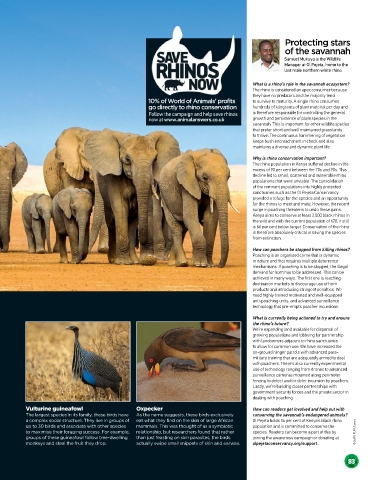
Vulturine guineafowl Oxpecker How can readers get involved and help out with
The largest species in its family, these birds have As the name suggests, these birds exclusively conserving the savannah’s endangered animals?
a complex social structure. They live in groups of eat what they find on the skin of large African Ol Pejeta holds 16 per cent of Kenya’s black rhino
up to 30 birds and associate with other species mammals. This was thought of as a symbiotic population and is committed to conserve the
to maximise their foraging success. For example, relationship, but researchers found that rather species. Readers can become a part of this by © Sol90; FLPA; Corbis
groups of these guineafowl follow tree-dwelling than just feasting on skin parasites, the birds joining the awareness campaign or donating at
monkeys and steal the fruit they drop. actually swipe small snippets of skin and earwax. olpejetaconservancy.org/support.
83

