


Page 274 - (DK Eyewitness) Travel Guide - Hungary
P. 274
272 TR A VELLERS ’ NEEDS THE FLA VOURS OF HUNGAR Y 273
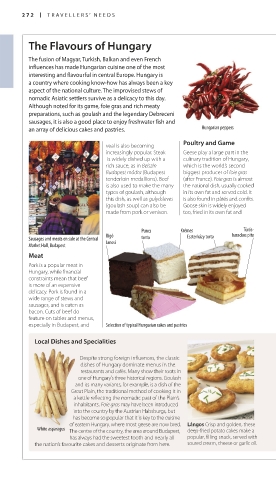
The Flavours of Hungary Paprika peppers are a culinary
staple and many types are
The fusion of Magyar, Turkish, Balkan and even French grown. They are either cooked
influences has made Hungarian cuisine one of the most as part of a dish – töltött paprika
interesting and flavourful in central Europe. Hungary is (peppers stuffed with meat and
rice) are served up everywhere
a country where cooking know-how has always been a key – or dried and ground up to
aspect of the national culture. The improvised stews of be used as a spice. There are
nomadic Asiatic settlers survive as a delicacy to this day. hundreds of different types of
Although noted for its game, foie gras and rich meaty ground paprika, which vary in
preparations, such as goulash and the legendary Debreceni flavour and strength. Although
sausages, it is also a good place to enjoy freshwater fish and paprika is the emblematic spice
of Hungary, it was not always
an array of delicious cakes and pastries. Hungarian peppers so. During the 19th century
Poultry and Game Market stall laden with root vegetables and strings of dried peppers national resistance movements,
veal is also becoming Hungarian cooks started the
increasingly popular. Steak Geese play a large part in the served with purple onion or Vegetables excessive use of paprika powder
is widely dished up with a culinary tradition of Hungary, pickles. Duck is another regular Potatoes, tomatoes and to differentiate Hungarian and
rich sauce, as in Belszín which is the world’s second on Hungarian menus, frequently cabbage are usually the main Austrian gastronomy.
Budapest módra (Budapest biggest producer of foie gras roasted with chestnuts or berries vegetables. But from May
tenderloin medallions). Beef (after France). Foie gras is almost and served with red cabbage. to July, fine white asparagus BEST LOCAL SNACKS
is also used to make the many the national dish, usually cooked Pheasant may also be on offer, appears on market stalls, with
types of goulash, although in its own fat and served cold. It normally in a rich soup. Venison many restaurants serving Sausages Most buffets and
this dish, as well as gulyásleves is also found in pâtés and confits. is common, and usually served spárgaleves, a rich creamy butcher’s shops offer the lightly
(goulash soup) can also be Goose skin is widely enjoyed as a spicy pörkölt (goulash) or in soup made from asparagus smoked Debreceni sausage,
made from pork or venison. too, fried in its own fat and a vegetable sauce with bread. and veal stock. made from beef, pork, paprika
and garlic. It is generally eaten
with bread and mustard.
Puncs Krémes Túrós- Fish Chestnuts In winter, Budapest
Rigó Eszterházy torta barackos pite
Sausages and meats on sale at the Central torta Traditional Hungarian dishes is crammed with stalls selling
Market Hall, Budapest Jancsi are made from freshwater freshly roasted chestnuts.
fish, with carp the most widely Pancakes, fritters and
Meat
eaten, although catfish, zander doughnuts Snack bars all
Pork is a popular meat in bream and trout can also be over the country serve tasty
Hungary, while financial found on most menus. A fried doughy snacks all day
constraints mean that beef popular soup is halászlé, made long. Try alma pongyolában
is more of an expensive with carp or catfish and (apple fritters).
delicacy. Pork is found in a seasoned with a generous Gingerbread Shops devoted
wide range of stews and dash of paprika. Another to selling gingerbread are
sausages, and is eaten as favourite is harcsapaprikás, a everywhere. At Christmas it is
bacon. Cuts of beef do goulash-style fish stew with often highly decorated and
feature on tables and menus, sour cream and served with Roasting chestnuts, a common sight on given as a present.
especially in Budapest, and Selection of typical Hungarian cakes and pastries galuska, a type of noodle. Budapest’s winter streets
Local Dishes and Specialities
Despite strong foreign influences, the classic
dishes of Hungary dominate menus in the
restaurants and cafés. Many show their roots in
one of Hungary’s three historical regions. Goulash
and its many variants, for exam ple, is a dish of the
Great Plain, the traditional method of cooking it in
a kettle reflecting the nomadic past of the Plain’s
inhabitants. Foie gras may have been introduced
into the country by the Austrian Habsburgs, but
has become so popu lar that it is key to the cuisine
of eastern Hungary, where most geese are now bred. Lángos Crisp and golden, these Csirkepaprikás Chicken ragout Gulyásleves A type of goulash, Dobos Torta Fine slices of
White asparagus The centre of the country, the area around Budapest, deep- fried potato cakes make a in a creamy sauce made from this soup made of pork or beef sponge cake are layered with
has always had the sweet est tooth and nearly all popular, filling snack, served with paprika and sour cream. Usually with vegetables is flavoured with chocolate cream and topped
the nation’s favourite cakes and desserts originate from here. soured cream, cheese or garlic oil. served with Hungarian noodles. onion, caraway and paprika. with glossy caramel.
272-273_EW_Hungary.indd 272 18/09/17 3:38 pm 272-273_EW_Hungary.indd 273 18/09/17 3:38 pm

