


Page 18 - All About History - Issue 53-17
P. 18
REFORMATION


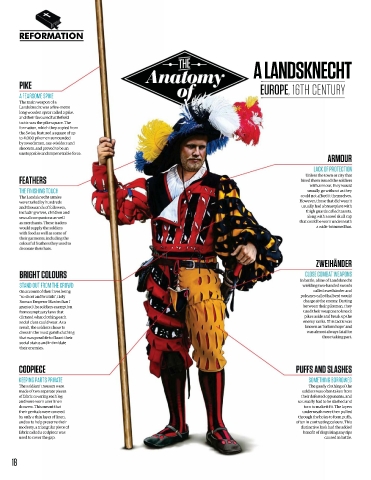
                                                                THE                       A LANDSKNECHT

                                                    Anatomy

        PIKE                                                       f                        EUROPE, 16TH CENTURY

        A FEARSOME SPIKE
        The main weapon of a
        Landsknecht was a five-metre
        long wooden spear called a pike,
        and their favoured battlefield
        tactic was the pike square. The
        formation, which they copied from
        the Swiss, featured a square of up
        to 4,000 pikemen surrounded
        by swordsmen, axe-wielders and
        shooters, and proved to be an
        unstoppable and impenetrable force.
                                                                                                                    ARMOUR

                                                                                                               LACK OF PROTECTION
                                                                                                            Unless the town or city that
        FEATHERS                                                                                           hired them issued the soldiers
                                                                                                              with armour, they would
        THE FINISHING TOUCH                                                                                  usually go without as they
        The Landsknecht armies                                                                             could not afford it themselves.
        were trailed by hundreds                                                                          However, those that did wear it
        and thousands of followers,                                                                        usually had a breastplate with
        including wives, children and                                                                        thigh guards called tassets,
        sexual companions as well                                                                            along with a steel skull cap
        as merchants. These traders                                                                       that could be worn underneath
        would supply the soldiers                                                                               a wide-brimmed hat.
        with food as well as some of
        their garments, including the
        colourful feathers they used to
        decorate their hats.


                                                                                                                ZWEIHÄNDER
        BRIGHT COLOURS                                                                                      CLOSE COMBAT WEAPONS
                                                                                                          In battle, a line of Landsknecht
        STAND OUT FROM THE CROWD                                                                           wielding two-handed swords
        On account of their lives being                                                                        called zweihänder and
        “so short and brutish”, Holy                                                                       poleaxes called halberd would
        Roman Emperor Maximilian I                                                                          charge at the enemy. Darting
        granted the soldiers exemption                                                                     between their pikemen, they
        from sumptuary laws that                                                                            used their weapons to knock
        dictated what clothing each                                                                         pikes aside and break up the
        social class could wear. As a                                                                       enemy ranks. This tactic was
        result, the soldiers chose to                                                                       known as ‘forlorn hope’ and
        dress in the most garish clothing                                                                    was almost always fatal for
        that was possible to flaunt their                                                                         those taking part.
        social status and intimidate
        their enemies.


                                                                                                         PUFFS AND SLASHES
        CODPIECE
        KEEPING PARTS PRIVATE                                                                                SOMETHING BORROWED
        The soldiers’ trousers were                                                                           The gaudy clothing of the
        made of two separate pieces                                                                        soldiers was often taken from
        of fabric covering each leg                                                                        their defeated opponents, and
        and were worn over linen                                                                          so usually had to be slashed and
        drawers. This meant that                                                                            torn to make it fit. The layers
        their genitals were covered                                                                        underneath were then pulled
        by only a thin layer of linen,                                                                    through the holes to form puffs,
        and so to help preserve their                                                                    often in contrasting colours. This
        modesty, a triangular piece of                                                                     distinctive look had the added
        fabric called a codpiece was                                                                        benefit of disguising any rips
        used to cover the gap.                                                                                     caused in battle.


     18

