


Page 308 - (DK Eyewitness) Travel Guide - South Africa
P. 308
306 GA UTENG , LIMPOPO AND MPUM ALANGA
Conservation in the Kruger
National Park
The Kruger National Park stretches for 352 km (220 miles)
along South Africa’s northeastern border. The 19,633-sq-km
(7,580-sq-mile) conservation area supports an astounding
array of fauna and flora. There are no longer fences between
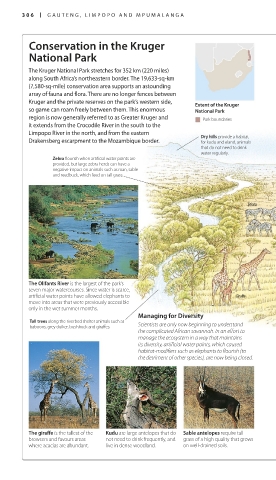
Kruger and the private reserves on the park’s western side, Extent of the Kruger
so game can roam freely between them. This enormous National Park
region is now generally referred to as Greater Kruger and Park boundaries
it extends from the Crocodile River in the south to the
Limpopo River in the north, and from the eastern Dry hills provide a habitat
Drakensberg escarpment to the Mozambique border. for kudu and eland, ani mals
that do not need to drink
water regularly.
Zebra flourish when artificial water points are
provided, but large zebra herds can have a
negative impact on animals such as roan, sable
and reedbuck, which feed on tall grass.
Zebra
The Olifants River is the largest of the park’s
seven major watercourses. Since water is scarce,
artificial water points have allowed elephants to Giraffe
move into areas that were previ ously accessible
only in the wet summer months.
Managing for Diversity
Tall trees along the riverbed shelter animals such as
baboons, grey duiker, bushbuck and giraffes. Scientists are only now beginning to understand
the complicated African savannah. In an effort to
manage the ecosystem in a way that maintains
its diversity, artificial water points, which caused
habitat-modifiers such as elephants to flourish (to
the detriment of other species), are now being closed.
The giraffe is the tallest of the Kudu are large antelopes that do Sable antelopes require tall
browsers and favours areas not need to drink frequently, and grass of a high quality that grows
where acacias are abundant. live in dense woodland. on well-drained soils.
306-307_EW_South_Africa.indd 306 25/05/17 2:47 pm

