


Page 9 - Dinosaur (DK Eyewitness Books)
P. 9
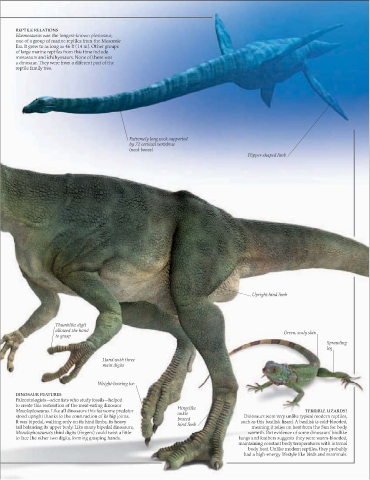
REPTILE RELATIONS
      Elasmosaurus was the longest-known plesiosaur,
      one of a group of marine reptiles from the Mesozoic
      Era. It grew to as long as 46 ft (14 m). Other groups
      of large marine reptiles from this time include
      mosasaurs and ichthyosaurs. None of these was
      a dinosaur. They were from a different part of the
      reptile family tree.


                                            Extremely long neck supported
                                            by 72 cervical vertebrae
                                            (neck bones)
                                                                                   Flipper-shaped limb


                                                                                    Upright hind limb


                   Thumblike digit
                   allowed the hand                                                            Green, scaly skin
                   to grasp
                                                                                                             Sprawling
                                                                                                             leg

                                   Hand with three
                                   main digits


                                 Weight-bearing toe
      DINOSAUR FEATURES
      Paleontologists—scientists who study fossils—helped
      to create this restoration of the meat-eating dinosaur
      Monolophosaurus. Like all dinosaurs this fearsome predator   Hingelike                          TERRIBLE LIZARDS?
      stood upright thanks to the construction of its hip joints.   ankle         Dinosaurs were very unlike typical modern reptiles,
      It was bipedal, walking only on its hind limbs, its heavy    braced        such as this basilisk lizard. A basilisk is cold-blooded,
      tail balancing its upper body. Like many bipedal dinosaurs,   hind limb       meaning it relies on heat from the Sun for body
      Monolophosaurus’s third digits (fingers) could twist a little                warmth. But evidence of some dinosaurs’ birdlike
      to face the other two digits, forming grasping hands.                     lungs and feathers suggests they were warm-blooded,
                                                                                maintaining constant body temperatures with internal
                                                                                   body heat. Unlike modern reptiles, they probably
                                                                                  had a high-energy lifestyle like birds and mammals.

