


Page 145 - The Dinosaur Book and Other Wonders of the Prehistoric World (DK-Smithsonian)
P. 145
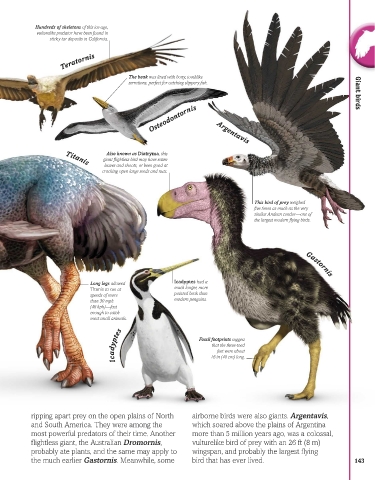
Hundreds of skeletons of this ice-age,
             vulturelike predator have been found in
                 sticky tar deposits in California.

                     Teratornis


                                           The beak was lined with bony, toothlike
                                           serrations, perfect for catching slippery fish.                           Giant birds


                                                  Osteodontornis        Argentavis


                                    Also known as Diatryma, this
                                   giant flightless bird may have eaten
                      Titanis
                                   leaves and shoots, or been good at
                                  cracking open large seeds and nuts.


                                                                                    This bird of prey weighed
                                                                                    five times as much as the very
                                                                                    similar Andean condor—one of
                                                                                    the largest modern flying birds.


                              Long legs allowed           Icadyptes had a                            Gastornis
                              Titanis to run at           much longer, more
                              speeds of more              pointed beak than
                              than 30 mph                 modern penguins.
                              (48 kph)—fast
                              enough to catch
                              most small animals.

                                       Icadyptes                  Fossil footprints suggest

                                                                      that the three-toed
                                                                        feet were about
                                                                      16 in (40 cm) long.


           ripping apart prey on the open plains of North       airborne birds were also giants. Argentavis,
           and South America. They were among the               which soared above the plains of Argentina
           most powerful predators of their time. Another       more than 5 million years ago, was a colossal,
           flightless giant, the Australian Dromornis,          vulturelike bird of prey with an 26 ft (8 m)
           probably ate plants, and the same may apply to       wingspan, and probably the largest flying
           the much earlier Gastornis. Meanwhile, some          bird that has ever lived.                            143


   US_142-143_Giant_birds.indd   143                                                                             20/06/2018   13:56

