


Page 143 - The Dinosaur Book and Other Wonders of the Prehistoric World (DK-Smithsonian)
P. 143
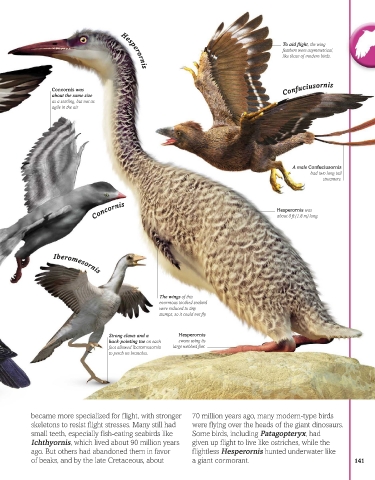
To aid flight, the wing
                                                                                             feathers were asymmetrical,
                                                                                             like those of modern birds.

                                        Hesperornis


                  Concornis was                                                              Confuciusornis
                  about the same size
                  as a starling, but not as
                  agile in the air.


                                                                                                 A male Confuciusornis
                                                                                                      had two long tail
                                                                                                          streamers.


                                Concornis                                                  Hesperornis was
                                                                                           about 6 ft (1.8 m) long.


                  Iberomesornis


                                                     The wings of this
                                                     enormous toothed seabird
                                                     were reduced to tiny
                                                     stumps, so it could not fly.


                                     Strong claws and a    Hesperornis
                                     back-pointing toe on each   swam using its
                                     foot allowed Iberomesornis   large webbed feet.
                                     to perch on branches.


           became more specialized for flight, with stronger    70 million years ago, many modern-type birds
           skeletons to resist flight stresses. Many still had   were flying over the heads of the giant dinosaurs.
           small teeth, especially fish-eating seabirds like    Some birds, including Patagopteryx, had
           Ichthyornis, which lived about 90 million years      given up flight to live like ostriches, while the
           ago. But others had abandoned them in favor          flightless Hesperornis hunted underwater like
           of beaks, and by the late Cretaceous, about          a giant cormorant.                                   141


   US_140-141_Early_birds.indd   141                                                                             10/04/18   3:34 PM

