


Page 194 - The Dinosaur Book and Other Wonders of the Prehistoric World (DK-Smithsonian)
P. 194
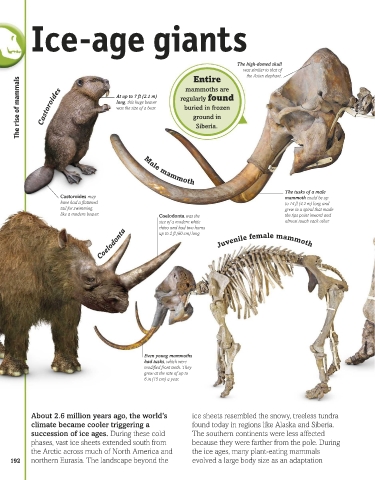
Ice-age giants


                                                                              The high-domed skull
                                                                                was similar to that of
                                                                                  the Asian elephant.
                                                                Entire
       The rise of mammals  Castoroides  At up to 7 ft (2.1 m)   regularly found
                                                              mammoths are
                                       long, this huge beaver
                                                             buried in frozen
                                       was the size of a bear.
                                                                ground in
                                                                 Siberia.


                                                Male mammoth
                                                                                              The tusks of a male
                     Castoroides may                                                          mammoth could be up
                     have had a flattened                                                     to 14 ft (4.2 m) long and
                     tail for swimming,                                                       grew in a spiral that made
                     like a modern beaver.           Coelodonta was the                       the tips point inward and
                                                     size of a modern white                   almost touch each other.
                                                     rhino and had two horns
                                 Coelodonta          up to 2 ft (60 cm) long.  Juvenile female mammoth


                                                Even young mammoths
                                                had tusks, which were
                                                modified front teeth. They
                                                grew at the rate of up to
                                                6 in (15 cm) a year.


           About 2.6 million years ago, the world’s             ice sheets resembled the snowy, treeless tundra
           climate became cooler triggering a                   found today in regions like Alaska and Siberia.
           succession of ice ages. During these cold            The southern continents were less affected
           phases, vast ice sheets extended south from          because they were farther from the pole. During
           the Arctic across much of North America and          the ice ages, many plant-eating mammals
    192    northern Eurasia. The landscape beyond the           evolved a large body size as an adaptation


   US_192-195_Ice-age_Giants.indd   192                                                                          23/04/18   6:16 PM

