


Page 35 - The Dinosaur Book and Other Wonders of the Prehistoric World (DK-Smithsonian)
P. 35
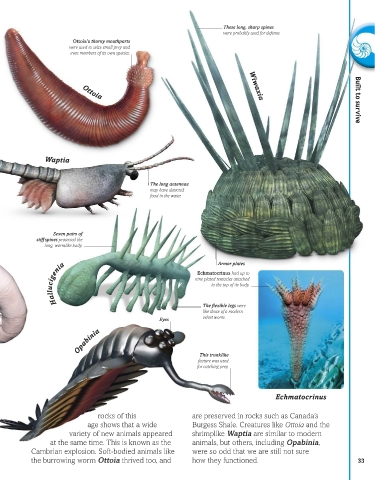
These long, sharp spines
                                                                          were probably used for defense.
                         Ottoia’s thorny mouthparts
                        were used to seize small prey and
                        even members of its own species.                          Wiwaxia                            Built to survive


                            Ottoia


                Waptia


                                                  The long antennae
                                                  may have detected
                                                  food in the water.


                  Seven pairs of
             stiff spines protected the
                long, wormlike body.                                    Armor plates


                    Hallucigenia                                 nine plated tentacles attached
                                                                 Echmatocrinus had up to

                                                                      to the top of its body.


                                                                   The flexible legs were
                                                                   like those of a modern
                                                                   velvet worm.
                                                     Eyes
                          Opabinia


                                                                  This trunklike
                                                                  feature was used
                                                                 for catching prey.


                                                                                           Echmatocrinus


                                 rocks of this                  are preserved in rocks such as Canada’s
                              age shows that a wide             Burgess Shale. Creatures like Ottoia and the
                        variety of new animals appeared         shrimplike Waptia are similar to modern
                 at the same time. This is known as the         animals, but others, including Opabinia,
           Cambrian explosion. Soft-bodied animals like         were so odd that we are still not sure
           the burrowing worm Ottoia thrived too, and           how they functioned.                                  33


   US_032-033_Built_to_survive.indd   33                                                                         10/04/18   3:32 PM

