


Page 39 - The Dinosaur Book and Other Wonders of the Prehistoric World (DK-Smithsonian)
P. 39
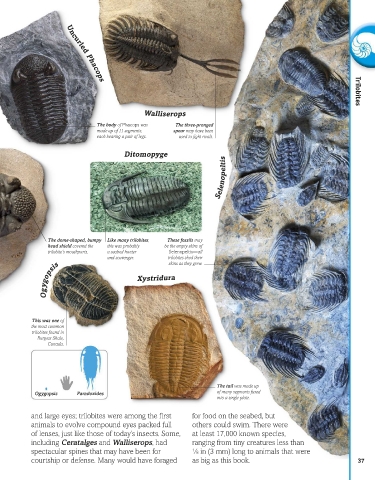
Uncurled Phacops


                                                Walliserops                                                          Trilobites

                                 The body of Phacops was   The three-pronged
                                 made up of 11 segments,   spear may have been
                                 each bearing a pair of legs.  used to fight rivals.

                                          Ditomopyge
                                                                         Selenopeltis


                 The dome-shaped, bumpy   Like many trilobites,   These fossils may
                 head shield covered the   this was probably    be the empty skins of
                 trilobite’s mouthparts.  a seabed hunter    Selenopeltis—all
                                    and scavenger.      trilobites shed their
                Ogygopsis                     Xystridura
                                                        skins as they grew.


           This was one of
           the most common
           trilobites found in
             Burgess Shale,
                 Canada.


                                                                        The tail was made up
            Ogygopsis     Paradoxides                                   of many segments fused
                                                                        into a single plate.

           and large eyes; trilobites were among the first      for food on the seabed, but
           animals to evolve compound eyes packed full          others could swim. There were
           of lenses, just like those of today’s insects. Some,   at least 17,000 known species,
           including Ceratalges and Walliserops, had            ranging from tiny creatures less than
           spectacular spines that may have been for            1 ⁄8 in (3 mm) long to animals that were
           courtship or defense. Many would have foraged        as big as this book.                                  37


   US_036-037_Trilobites.indd   37                                                                               26/04/18   3:30 PM

