


Page 344 - (DK Eyewitness) Travel Guide - Spain
P. 344
342 CENTR AL SP AIN
The Flavours of Central Spain
Madrid is famous for its extremes of temperature – a climate that
has given rise to the rueful local saying “nine months of winter and
three months of hell”. The surrounding regions suffer the same
extremes, and their traditional cuisines reflect both the wintry
cold and the dusty, scorched terrain. Meat predominates as
roasts and stews and in warm ing soups, thickened with beans
and pulses, which thrive despite the weather. Cured hams,
spicy sausages and pungent cheeses are excellent accompaniments Manchego cheese
to the strong local wine. The finest ham is from Extremadura, where
black-footed (pata negra) pigs forage freely among the oaks.
Castilla y Leon
particularly when it comes
to pork, and Madrid menus Spread out high on a plain,
may feature brains, ears, searingly hot in summer, and
pigs’ trotters, and callos a la bitingly cold in winter, Castilla
madrileña (tripe) is a classic y León is famous for its roasted
local dish. Sturdy stews, meats, served in asadores
such as the celebrated cocido (grillhouses). The most cele
madrileño, keep out the brated local dish is cochinillo
bitter winter cold. The tapeo – (suckling pig), but pork,
a bar crawl between tapas chicken, game in season and
bars – is an institution in the lamb are also popular. These
city, and each bar has its own are often combined with local
speciality dish. pulses and lentils in hearty
White (butter)
Pinto beans beans Castillian
A chef preparing gambas al ajillo, a garbanzos Red (kidney)
popular tapas dish (chickpeas) beans
Black
Madrid beans
Restaurants in Madrid, as
befits the Spanish capital, offer
cuisine from every corner of
the country. Curiously, con
sidering its distance from the
ocean, the capital is famed for
its seafood, flown in freshly Armuña lentils
every day. Madrileños appreciate
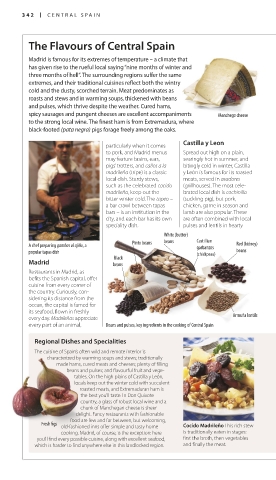
every part of an animal, Beans and pulses, key ingredients in the cooking of Central Spain
Regional Dishes and Specialities
The cuisine of Spain’s often wild and remote interior is
characterized by warming soups and stews; traditionally
made hams, cured meats and cheeses; plenty of filling
beans and pulses; and flavourful fruit and vege
tables. On the high plains of Castilla y León,
locals keep out the winter cold with succulent
roasted meats, and Extremaduran ham is
the best you’ll taste. In Don Quixote
country, a glass of robust local wine and a
chunk of Manchegan cheese is sheer
delight. Fancy restaurants with fashion able
food are few and far between, but welcoming,
Fresh figs
oldfashioned inns offer simple and tasty home Cocido Madrileño This rich stew
cooking. Madrid, of course, is the exception: here is traditionally eaten in stages:
you’ll find every possible cuisine, along with excellent seafood, first the broth, then vegetables
which is harder to find anywhere else in this landlocked region. and finally the meat.
342-343_EW_Spain.indd 342 26/09/17 11:02 am

