


Page 348 - (DK Eyewitness) Travel Guide - Spain
P. 348
346 CENTR AL SP AIN
Birds of Central Spain
The vast and varied wild habitats of Central Spain are
home to the richest avifauna in the peninsula. White storks’
nests are a common sight on the church towers and
chimneypots of towns. Grebes, herons and shovelers can
be seen in the marshlands; the distinctive hoopoe is often
spotted in woods; and grasslands are the nesting grounds
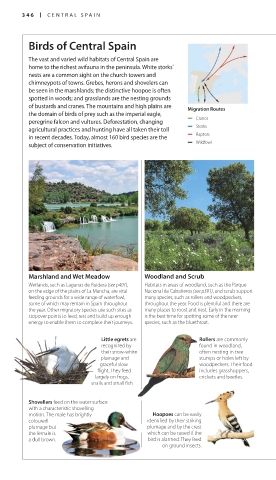
of bustards and cranes. The mountains and high plains are Migration Routes
the domain of birds of prey such as the imperial eagle, Cranes
peregrine falcon and vultures. Deforestation, changing Storks
agricultural practices and hunting have all taken their toll Raptors
in recent decades. Today, almost 160 bird species are the Wildfowl
subject of conservation initiatives.
Marshland and Wet Meadow Woodland and Scrub
Wetlands, such as Lagunas de Ruidera (see p401), Habitats in areas of woodland, such as the Parque
on the edge of the plains of La Mancha, are vital Nacional de Cabañeros (see p391), and scrub support
feeding grounds for a wide range of waterfowl, many species, such as rollers and woodpeckers,
some of which may remain in Spain throughout throughout the year. Food is plentiful and there are
the year. Other migratory species use such sites as many places to roost and nest. Early in the morning
stopover points to feed, rest and build up enough is the best time for spotting some of the rarer
energy to enable them to complete their journeys. species, such as the bluethroat.
Little egrets are Rollers are commonly
recognized by found in woodland,
their snow-white often nesting in tree
plumage and stumps or holes left by
graceful slow woodpeckers. Their food
flight. They feed includes grasshoppers,
largely on frogs, crickets and beetles.
snails and small fish.
Shovellers feed on the water surface
with a characteristic shovelling
motion. The male has brightly Hoopoes can be easily
coloured identified by their striking
plumage but plumage and by the crest
the female is which can be raised if the
a dull brown. bird is alarmed. They feed
on ground insects.
346-347_EW_Spain.indd 346 26/09/17 12:05 pm

