


Page 268 - (DK Eyewitness) Travel Guide - India
P. 268
266 EASTERN INDIA
The Story of Indian Tea
India is the world’s second-largest producer of tea, perhaps
the world’s most popular drink. The tea plant (Camellia
sinensis) is indige nous to Northeast India, and though
tea was cultivated and drunk for centuries by the Singpho
tribe of Arunachal Pradesh as a stimulant and medicinal
brew, tea plantations for commercial exploitation were
only established in the mid-19th century. Today, the
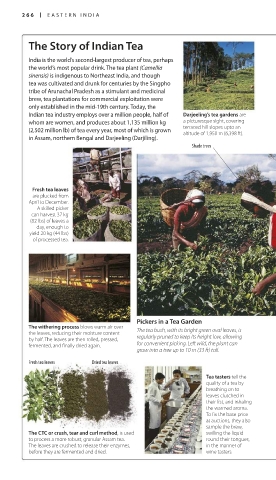
Indian tea industry employs over a million people, half of Darjeeling’s tea gardens are
whom are women, and produces about 1,135 million kg a picturesque sight, covering
(2,502 million lb) of tea every year, most of which is grown terraced hill slopes upto an
altitude of 1,950 m (6,398 ft).
in Assam, northern Bengal and Darjeeling (Darjiling).
Shade trees
Fresh tea leaves
are plucked from
April to December.
A skilled picker
can harvest 37 kg
(82 lbs) of leaves a
day, enough to
yield 20 kg (44 lbs)
of processed tea.
Pickers in a Tea Garden
The withering process blows warm air over The tea bush, with its bright green oval leaves, is
the leaves, reducing their moisture content
by half. The leaves are then rolled, pressed, regularly pruned to keep its height low, allowing
fermented, and finally dried again. for convenient picking. Left wild, the plant can
grow into a tree up to 10 m (33 ft) tall.
Fresh tea leaves Dried tea leaves
Tea tasters tell the
quality of a tea by
breathing on to
leaves clutched in
their fist, and inhaling
the warmed aroma.
To fix the base price
at auctions, they also
sample the brew,
The CTC or crush, tear and curl method, is used swilling the liquid
to process a more robust, granular Assam tea. round their tongues,
The leaves are crushed to release their enzymes, in the manner of
before they are fermented and dried. wine tasters.
266-267_EW_India.indd 266 26/04/17 11:45 am
Eyewitness Travel LAYERS PRINTED:
Feature template “UK” LAYER
(SourceReport v1.3)
Date 18th October 2012
Size 125mm x 217mm

