


Page 484 - (DK Eyewitness) Travel Guide - India
P. 484
482 SOUTHWESTERN INDIA
Exploring Ellora
The 34 caves at Ellora, hewn from
a 2-km (1-mile) long escarpment,
are among the most splendid
examples of rock-cut architecture
in India.
The emergence and growing
importance of Ellora coincided
with the decline of Buddhism,
and a Hindu renaissance under
the Chalukya and Rashtrakuta
dynasties (7th–9th centuries AD).
Ellora was situated on an
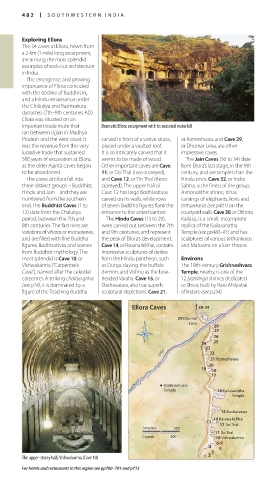
important trade route that Dramatic Ellora escarpment with its seasonal waterfall
ran between Ujjain in Madhya
Pradesh and the west coast. It carved in front of a votive stupa, or Rameshvara, and Cave 29,
was the revenue from this very placed under a vaulted roof. or Dhumar Lena, are other
lucrative trade that sustained It is so intricately carved that it impressive caves.
500 years of excavation at Ellora, seems to be made of wood. The Jain Caves (30 to 34) date
as the older Ajanta caves began Other important caves are Cave from Ellora’s last stage, in the 9th
to be abandoned. 11, or Do Thal (two-storeyed), century, and are simpler than the
The caves at Ellora fall into and Cave 12, or Tin Thal (three- Hindu ones. Cave 32, or Indra
three distinct groups – Buddhist, storeyed). The upper hall of Sabha, is the finest of the group.
Hindu and Jain – and they are Cave 12 has large Bodhisattvas A monolithic shrine, it has
numbered from the southern carved on its walls, while rows carvings of elephants, lions and
end. The Buddhist Caves (1 to of seven Buddha figures flank the tirthankaras (see p401) on the
12) date from the Chalukya entrance to the antechamber. courtyard walls. Cave 30, or Chhota
period, bet ween the 7th and The Hindu Caves (13 to 29), Kailasa, is a small, incomplete
8th centuries. The first nine are were carved out between the 7th replica of the Kailasanatha
variations of viharas or monasteries, and 9th centuries, and represent Temple (see pp480–81) and has
and are filled with fine Buddha the peak of Ellora’s development. sculptures of various tirthankaras
figures, Bodhisattvas and scenes Cave 14, or Ravana ki Khai, contains and Mahavira on a lion-throne.
from Buddhist mythology. The impressive sculptures of deities
most splendid is Cave 10, or from the Hindu pantheon, such Environs
Vishwakarma (“Carpenter’s as Durga slaying the buffalo The 18th-century Grishneshvara
Cave”), named after the celestial demon, and Vishnu as the boar- Temple, nearby, is one of the
carpenter. A striking chaitya griha headed Varaha. Cave 15, or 12 jyotirlinga shrines dedicated
(see p24), it is dominated by a Dashavatara, also has superb to Shiva, built by Rani Ahilyabai
figure of the Teaching Buddha sculptural depictions. Cave 21, of Indore (see p254).
Ellora Caves 30-34
29 Dhumar
Lena
28
27
26
24 23 25
Girija 22
21 Rameshvara
20
19
18
Grishneshvara
•
Temple 16 Kailasanatha
Temple
15 Dashavatara
14 Ravana ki Khai
13
0 metres 300 12 Tin Thal
11 Do Thal
0 yards 300 10 Vishwakarma
6-9
4 5
3
The upper-storey hall, Vishwakarma (Cave 10) 1 2
For hotels and restaurants in this region see pp700–701 and p715
482-483_EW_India.indd 482 26/04/17 11:54 am

