


Page 521 - (DK Eyewitness) Travel Guide - India
P. 521
K ARNA T AK A 519
The Glitter of Gold
The ancient seers of India referred to gold by many names – synonyms for life, longevity,
and beauty. Indians considered this metal auspicious and believed that wearing gold
ornam ents would ensure a long life. Craftsmen traditionally drew inspiration for their
designs and motifs from nature, and also from the splendid temples with their ornately
carved façades. The Kolar and Hatti mines in Karnataka were the repositories of the
largest deposits of gold in ancient India. Due to the high price of gold, craftsmen
mastered the technique of beating a minuscule quantity of gold into thin sheets
and then transforming them into exquisite jewellery.
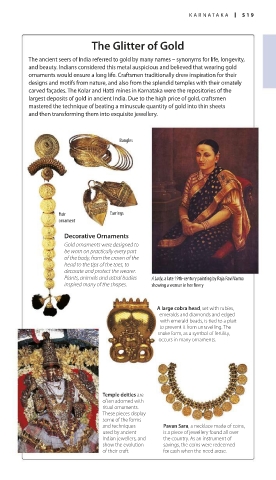
Bangles
Hair Earrings
ornament
Decorative Ornaments
Gold ornaments were designed to
be worn on practically every part
of the body, from the crown of the
head to the tips of the toes, to
decorate and protect the wearer.
Plants, animals and astral bodies A Lady, a late 19th-century painting by Raja Ravi Varma
inspired many of the shapes. showing a woman in her finery
A large cobra head, set with rubies,
emeralds and diamonds and edged
with emerald beads, is tied to a plait
to prevent it from unravelling. The
snake form, as a symbol of fertility,
occurs in many ornaments.
Temple deities are
often adorned with
ritual ornaments.
These pieces display
some of the forms
and techniques Pavan Sara, a necklace made of coins,
used by ancient is a piece of jewellery found all over
Indian jewellers, and the country. As an instrument of
show the evolution savings, the coins were redeemed
of their craft. for cash when the need arose.
518-519_EW_India.indd 519 26/04/17 11:48 am

