


Page 260 - (DK Eyewitness) Travel Guide: Japan
P. 260
258 JAP AN REGION B Y REGION
Exploring Shuri
The 16th-century former capital,
6 km (4 miles) east of central
Naha, contains various shrines,
temples, ceremonial gates, and
fortifications – a reminder of the
sophistication of the Ryukyu
kingdom. Ryusen and bingata
(see p261) fabrics are made,
exhibited, and sold at the Shuri
Ryusen, where the materials are
dyed. With over 4,000 exhibits, the
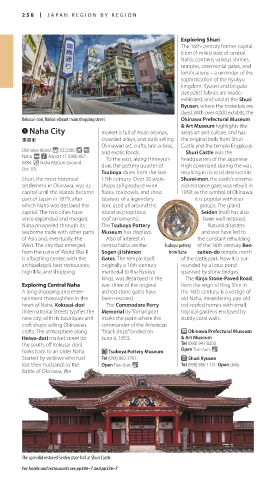
Kokusai-dori, Naha’s vibrant main shopping street Oki nawa Prefectural Museum
& Art Museum highlights the
1 Naha City market is full of Asian aromas, area’s art and culture, and has
Naha City crowded alleys, and stalls selling the original bells from Shuri
Okinawan art, crafts, bric-a-brac, Castle and the temple Engaku-ji.
Okinawa Island. * 322,000. k g and exotic foods. Shuri Castle was the
Naha. @ n Airport 1F (098) 857- To the east, along Himeyuri- headquarters of the Japanese
6884. _ Naha Matsuri (around
Oct 10). dori, the pottery quarter of High command during the war,
Tsuboya dates from the late resulting in its total destruction.
Shuri, the most historical 17th century. Over 20 work- Shurei-mon, the castle’s ceremo-
settlement in Okinawa, was its shops still produce wine nial entrance gate, was rebuilt in
capital until the islands became flasks, tea bowls, and shisa 1958; as the symbol of Okinawa,
part of Japan in 1879, after (statues of a legendary it is popular with tour
which Naha was declared the lion, used all around the groups. The grand
capital. The two cities have island as propitious Seiden (hall) has also
since expanded and merged. roof ornaments). been well restored.
Naha prospered through its The Tsuboya Pottery Natural disasters
seaborne trade with other parts Museum has displays. and war have led to
of Asia and, eventually, the Also of interest in the constant re building
West. The city that emerged central Naha are the Tsuboya pottery of the 16th-century Ben-
from the ruins of World War II Sogen-ji Ishi mon from Naha zaiten-do temple, north
is a bustling center, with the Gates. The temple itself, of the castle park. Now it is sur-
archipelago’s best restaurants, origin ally a 16th-century rounded by a lotus pond
nightlife, and shopping. memorial to the Ryukyu spanned by stone bridges.
kings, was destroyed in the The Kinjo Stone-Paved Road,
Exploring Central Naha war, three of the original from the reign of King Shin in
A long shopping and enter- arched stone gates have the 16th century, is a vestige of
tainment thoroughfare in the been restored. old Naha, meandering past old
heart of Naha, Kokusai-dori The Commodore Perry red-roofed homes with small
(Inter national Street) typifies the Memorial by Tomari port tropical gardens enclosed by
new city, with its boutiques and marks the point where the sturdy coral walls.
craft shops selling Okinawan commander of the American
crafts. The atmosphere along “black ships” landed on P Okinawa Prefectural Museum
Heiwa-dori market street (to June 6, 1853. & Art Museum
the south, off Kokusai-dori) Tel (098) 941-8200.
harks back to an older Naha. E Tsuboya Pottery Museum Open Tue–Sun. &
Started by widows who had Tel (098) 862-3761. E Shuri Ryusen
lost their husbands in the Open Tue–Sun. & Tel (098) 886-1131. Open daily.
Battle of Okinawa, the
The splendid restored Seiden state hall at Shuri Castle
For hotels and restaurants see pp306–7 and pp336–7
258-259_EW_Japan.indd 258 08/08/16 2:54 pm

