


Page 12 - Human Environment Interface (4)
P. 12
Brain Reading for Human-Machine Interfaces

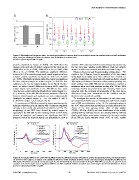
Figure 7. Evaluation of response time. The mean and median of response time for each subject across two sessions based on EMG and buzzer
press events are displayed. A: Mean of response time. B: Median of response time.
doi:10.1371/journal.pone.0081732.g007

parisons: standards vs. targets: pv0:001]. The P300 effect was         substitute EEG instances evoked by missed targets during training.
stronger at the electrodes Cz and Pz compared to the electrode Oz      For the later time window results differed. Only two subjects
[P300 effect at Cz: pv0:001, P300 effect at Pz: pv0:001, P300          showed no differences between standards and missed targets.
effect at Oz: pv0:045]. The significant amplitude difference
between the ERPs evoked by targets and missed targets stems from         Window of Interest and Transferability of Classifier. The
a higher positive amplitude on targets for both time windows           results in Fig. 9 illustrate how the separability of the two classes
[pv0:001]. This higher positivity elicited by targets was significant  missed targets versus targets varies when different time windows are
for four subjects [targets vs. missed targets: pv0:02 for four         used for classification. For small and early windows (before around
subjects, p~n:s: for one subject (subject 1), see Fig. 8]. Further-    300 ms) the performance is lowest but above random guessing. For
more, no subject showed differences between ERPs evoked by             small window sizes (200–400 ms) the performance reached a
missed targets and standards in the 300–600 ms time range              maximum when used with windows starting after 300 ms. With
recorded over central electrodes [standards vs. missed targets: p~     increasing window size performance also increases, which is yet
n.s.]. However, in the 600–900 ms window, amplitude differences        impacted with the increased dimensionality of the data (more
between missed targets and standards are more subject-specific         dimensions imply more information for the classifier) and has
[standards vs. missed targets: p~ n.s. for subject 4 and 5,            therefore to be considered carefully.
pv0:029 for subject 1, 2, and 3, see Fig. 8].
                                                                          To investigate the amount of information in each time range,
   To summarize, a P300 effect elicited by targets was observed for    we compared performances on training data with fixed window
both time windows and in all subjects with a maximum amplitude         sizes of 300 ms as illustrated in Fig. 10. The statistical analysis of
intensity at the central and parietal electrodes (Cz and Pz). The      the AUC values shows that performance is clearly affected by the
morphology of the ERP form elicited by missed targets is,              choice of the time window [main effect of time window:
especially in the 300–600 ms time window, similar to ERP forms         F (2,22)~82:43,pv0:001] and that classification of the middle
elicited by standards and supports our hypothesis that EEG             window (300 ms–600 ms) and the late window (300 ms–600 ms)
instances evoked by standard stimuli can potentially be used to        clearly yields higher performance compared to the early window
                                                                       (0 ms–300 ms) [early window: mean AUC of 0.82, middle

Figure 8. Averaged ERPs in the Labyrinth Oddball scenario. Different averaged ERP patterns evoked by standards, targets, and missed targets
are shown for two subjects. A: Subject 1: No significant difference in ERP amplitude between targets and missed targets but significant difference in
ERP amplitude between standards and missed targets for the late window was found. B: Subject 5: A higher P300 effect on targets compared to both
standards and missed targets and no significant difference in ERP amplitude between standards and missed targets for the late window was found.
doi:10.1371/journal.pone.0081732.g008

PLOS ONE | www.plosone.org                                             10 December 2013 | Volume 8 | Issue 12 | e81732

