


Page 13 - Human Environment Interface (4)
P. 13
Brain Reading for Human-Machine Interfaces

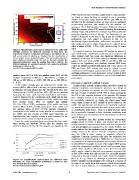
Figure 9. Classification performance obtained in the Labyrinth            P300 related processes contribute substantially to class separabil-
Oddball scenario for different windows of EEG data. The                   ity. Based on theses findings, we decided to use a processing
dependency between classification performance and window size as          window in the time range between 300 ms and 1000 ms. As
well as start point of window are displayed for the classification of     described in the methods section, we now used an optimized
missed targets versus recognized targets. The start position (y-axis) is  preprocessing procedure and classifier for this window. On
given relative to stimulus onset. The inset on the right indicates the    average, a BA of 0:85 (standard deviation: 0:06) was obtained.
optimized performance using the window from 300 to 1000 ms. The           While the measure of the AUC served for finding the interesting
different windows are compared using the AUC, while the optimized         window ranges, this performance measure now reflects what the
performance is given as BA.                                               particular classifier is able to achieve. The distribution of the
doi:10.1371/journal.pone.0081732.g009                                     results is illustrated in the inset in Fig. 9 and the classification
                                                                          performance for each subject is depicted in Fig. 11. A
window: mean AUC of 0.90, late window: mean AUC of 0.88,                  significantly higher classification performance compared to all
multiple comparisons: 0–300 ms vs. 300–600 ms: pv0:001, 0–                other subjects (except for subject 5) was shown for subject 4 [main
300 ms vs. 600–900 ms, pv0:001, 300–600 ms vs. 600–900 ms:                effect of subject: F (8,88)~2:97,pv0:03, details see Fig. 11 lower
p~0:10].                                                                  right].

   In the further analysis were we combined the middle time                  It is worth to point out that average ERP analysis for subjects 4
window (300 to 600 ms) that is showing the highest classification         and 5 (with better classification performance) in contrast to all
performance for most subjects (see Fig. 10) with both other time          other subjects could not reveal any significant differences in
windows (early: 0 to 300 ms and late: 600 to 900 ms time window)          amplitude of averaged ERP forms evoked by standards and missed
separately, the main result was that classification performance           targets in both time windows (300 to 600 ms and 600 to 900 ms).
could be improved by the combination of the middle and late time          Based on our hypotheses, such similarity between ERP forms
window compared to the combination of the middle and early                evoked by standard and missed target stimuli and a clear absence of
time window [main effect of combined time window:                         P300 and later EPR activity that may be related to task
F (1,11)~13:03,pv0:005, combination of the middle and early               coordination would suggest a good outcome for classifier transfer
window: Mean of AUC of 0.89, combination of the middle and                and high performance as was shown here. Hence, results of ERP
late window: Mean of AUC of 0.92, pairwise comparison:                    analysis can under certain conditions be used to infer classification
combination of the middle and early window vs. combination of             performance.
the middle and late window: pv0:02] again supporting our
hypothesis that later cognitive activity is most important for the        Discussion: Labyrinth Oddball Scenario
prediction of the success of cognitive processing.                           Results of ERP and ML analysis confirm that ERPs evoked by

   Given the results presented above we obtained the best results         stimulus recognition and subsequent processes, e.g., change of
when starting the windows 300 ms after the stimulus was                   task and preparation of response, are most important to detect
presented (depicted in Fig. 9). This supports our hypothesis that         the state of target recognition by BR. This is a basic prerequisite
                                                                          for eBR to infer response behavior of the operator. We showed
Figure 10. Classification performance for different time                  that a classifier trained on the classes standards versus targets can
windows. The mean classification performance is shown for each            be successfully transferred to classify the classes missed targets
time window and each subject.                                             versus targets. Results of ERP analysis of ERPs evoked in the
doi:10.1371/journal.pone.0081732.g010                                     middle time window that were found to be maximally expressed
                                                                          on central and parietal electrodes (Cz and Pz) were used to infer
                                                                          on classification performance. Thus, it is likely that the signal
                                                                          that is maximally expressed at these electrodes contributes most
                                                                          to the differences and similarities of the overall signal on all three
                                                                          types of stimuli.

                                                                             Our hypothesis that ERP activity evoked by unimportant
                                                                          standard stimuli is similar in shape and characteristic to ERP
                                                                          activity evoked by important stimuli that were not recognized as
                                                                          such (missed targets) was supported by the results. Further, our
                                                                          results indicate that this similarity is in the middle time windows
                                                                          mainly caused by the absence of target recognition processes,
                                                                          since the P300 is either missing or massively reduced in
                                                                          amplitude. Certainly, processes later than the evaluation and
                                                                          classification of stimuli (evoking a P300) that are related to task
                                                                          set preparation or response preparation and execution will also be
                                                                          involved [47]. For example, for some of the subjects ERP activity
                                                                          evoked by unimportant standard stimuli and by missed target
                                                                          stimuli shows significant differences in the later time window
                                                                          which may be related to late task set preparation processes [46]
                                                                          or late P300 activity that did not lead to a successful stimulus
                                                                          evaluation as discussed in [42] and requires further investigation
                                                                          (see Fig. 8, e.g., subject 1). Although a prominent similarity
                                                                          between standards and missed targets is the missing of a response of
                                                                          the subject, our results show that response related activity should
                                                                          not have a major influence on transferability of the classifier,

PLOS ONE | www.plosone.org                                                11 December 2013 | Volume 8 | Issue 12 | e81732

