


Page 197 - First Aid for the USMLE Step 1 2020, Thirtieth edition [MedicalBooksVN.com]_Neat
P. 197
Microbiology ` microbiology—mycology Microbiology ` microbiology—mycology SEcTioN ii 153
Opportunistic fungal infections
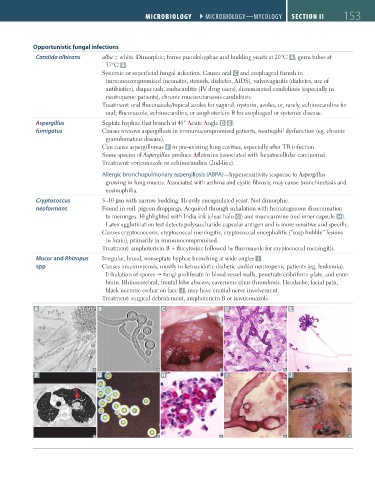
Candida albicans alba = white. Dimorphic; forms pseudohyphae and budding yeasts at 20°C A , germ tubes at
37°C B .
Systemic or superficial fungal infection. Causes oral C and esophageal thrush in
immunocompromised (neonates, steroids, diabetes, AIDS), vulvovaginitis (diabetes, use of
antibiotics), diaper rash, endocarditis (IV drug users), disseminated candidiasis (especially in
neutropenic patients), chronic mucocutaneous candidiasis.
Treatment: oral fluconazole/topical azoles for vaginal; nystatin, azoles, or, rarely, echinocandins for
oral; fluconazole, echinocandins, or amphotericin B for esophageal or systemic disease.
Aspergillus Septate hyphae that branch at 45° Acute Angle D E .
fumigatus Causes invasive aspergillosis in immunocompromised patients, neutrophil dysfunction (eg, chronic
granulomatous disease).
Can cause aspergillomas F in pre-existing lung cavities, especially after TB infection.
Some species of Aspergillus produce Aflatoxins (associated with hepatocellular carcinoma).
Treatment: voriconazole or echinocandins (2nd-line).
Allergic bronchopulmonary aspergillosis (ABPA)—hypersensitivity response to Aspergillus
growing in lung mucus. Associated with asthma and cystic fibrosis; may cause bronchiectasis and
eosinophilia.
Cryptococcus 5–10 μm with narrow budding. Heavily encapsulated yeast. Not dimorphic.
neoformans Found in soil, pigeon droppings. Acquired through inhalation with hematogenous dissemination
to meninges. Highlighted with India ink (clear halo G) and mucicarmine (red inner capsule H).
Latex agglutination test detects polysaccharide capsular antigen and is more sensitive and specific.
Causes cryptococcosis, cryptococcal meningitis, cryptococcal encephalitis (“soap bubble” lesions
in brain), primarily in immunocompromised.
Treatment: amphotericin B + flucytosine followed by fluconazole for cryptococcal meningitis.
Mucor and Rhizopus Irregular, broad, nonseptate hyphae branching at wide angles I .
spp Causes mucormycosis, mostly in ketoacidotic diabetic and/or neutropenic patients (eg, leukemia).
Inhalation of spores fungi proliferate in blood vessel walls, penetrate cribriform plate, and enter
brain. Rhinocerebral, frontal lobe abscess; cavernous sinus thrombosis. Headache, facial pain,
black necrotic eschar on face J ; may have cranial nerve involvement.
Treatment: surgical debridement, amphotericin B or isavuconazole.
A B C D E
F G H I J
FAS1_2019_03-Microbiology.indd 153 11/14/19 12:21 PM

