


Page 224 - First Aid for the USMLE Step 1 2020, Thirtieth edition [MedicalBooksVN.com]_Neat
P. 224
180 SEcTioN ii Microbiology ` microbiology—systems Microbiology ` microbiology—systems
Common causes of meningitis
NeWborN (0–6 mo) cHilDreN (6 mo–6 yr) 6–60 yr 60 yr +
Group B Streptococcus S pneumoniae N meningitidis S pneumoniae
E coli N meningitidis S pneumoniae N meningitidis
Listeria H influenzae type b Enteroviruses H influenzae type b
Group B Streptococcus HSV Group B Streptococcus
Enteroviruses Listeria
Give ceftriaxone and vancomycin empirically (add ampicillin if Listeria is suspected).
Viral causes of meningitis: enteroviruses (especially coxsackievirus), HSV-2 (HSV-1 = encephalitis), HIV, West Nile virus (also
causes encephalitis), VZV.
In HIV: Cryptococcus spp.
Note: Incidence of Group B streptococcal meningitis in neonates has greatly due to screening and antibiotic prophylaxis in
pregnancy. Incidence of H influenzae meningitis has greatly due to conjugate H influenzae vaccinations. Today, cases are
usually seen in unimmunized children.
Cerebrospinal fluid findings in meningitis
oPeNiNg PressUre cell tyPe ProteiN glUcose
Bacterial PMNs
Fungal/TB lymphocytes
Viral Normal/ lymphocytes Normal/ Normal
Infections causing Most commonly viridans streptococci and Staphylococcus aureus. If dental infection or extraction
brain abscess precedes abscess, oral anaerobes commonly involved.
Multiple abscesses are usually from bacteremia; single lesions from contiguous sites: otitis media
and mastoiditis temporal lobe and cerebellum; sinusitis or dental infection frontal lobe.
Toxoplasma reactivation in AIDS.
Osteomyelitis risK Factor associateD iNFectioN
A Assume if no other information is available S aureus (most common overall)
Sexually active Neisseria gonorrhoeae (rare), septic arthritis more
common
Sickle cell disease Salmonella and S aureus
Prosthetic joint replacement S aureus and S epidermidis
Vertebral involvement S aureus, M tuberculosis (Pott disease)
Cat and dog bites Pasteurella multocida
IV drug abuse S aureus; also Pseudomonas, Candida
Elevated ESR and CRP sensitive but not specific.
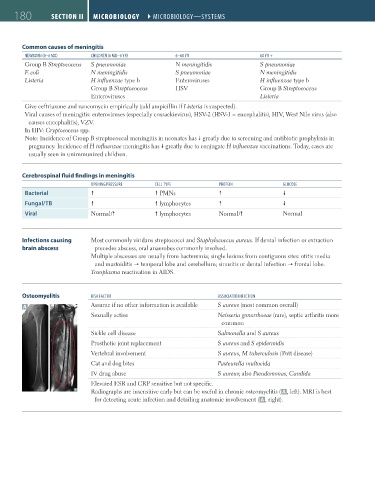
Radiographs are insensitive early but can be useful in chronic osteomyelitis ( A , left). MRI is best
for detecting acute infection and detailing anatomic involvement ( A , right).
FAS1_2019_03-Microbiology.indd 180 11/14/19 12:22 PM

