


Page 637 - The City and Guilds Textbook: Plumbing Book 1 for the Level 3 Apprenticeship (9189), Level 2 Technical Certificate (8202) and Level 2 Diploma (6035)
P. 637
Chapter 10 Domestic fuel systems

                Fuel oil (kerosene grade C2, 28 second

                viscosity oil to BS 2869:2017)

                A simple definition for fuel oil is a liquid by-product of crude oil, which is
                produced during petroleum refining. There are two main categories under which
                it is classified:

                1  distillate oils – such as diesel fuel
                2  residual oils – includes heating kerosene, generally used for home heating.

                Around 95 per cent of boilers burning fuel oil in domestic properties use
                kerosene, which is also known generically as C2 grade, 28 second viscosity
                oil. This is the preferred oil fuel grade for domestic heating, due to its clean
                combustion. Modern oil central heating boilers require only a single annual
                service if being used with an atomising pressure jet burner. It is the only oil
                grade that can be used with balanced or low-level flues.
                Kerosene has very good cold-weather characteristics and remains fluid beyond
                minus 40°C, although it does tend to thicken slightly during extremely cold
                weather.
                Kerosene is a high-carbon fuel and is clear or very pale yellow in colour. Newer
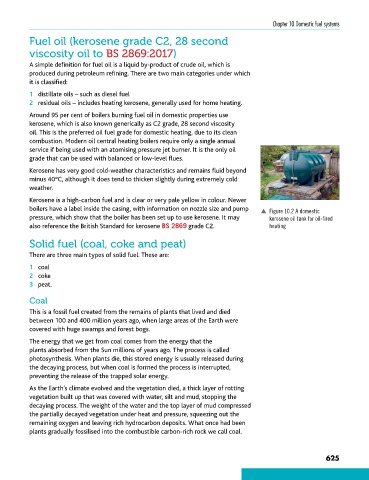
                boilers have a label inside the casing, with information on nozzle size and pump   p  Figure 10.2 A domestic
                pressure, which show that the boiler has been set up to use kerosene. It may   kerosene oil tank for oil-fired
                also reference the British Standard for kerosene BS 2869 grade C2.            heating

                Solid fuel (coal, coke and peat)

                There are three main types of solid fuel. These are:

                1  coal
                2  coke
                3  peat.

                Coal

                This is a fossil fuel created from the remains of plants that lived and died
                between 100 and 400 million years ago, when large areas of the Earth were
                covered with huge swamps and forest bogs.

                The energy that we get from coal comes from the energy that the
                plants absorbed from the Sun millions of years ago. The process is called
                photosynthesis. When plants die, this stored energy is usually released during
                the decaying process, but when coal is formed the process is interrupted,
                preventing the release of the trapped solar energy.

                As the Earth’s climate evolved and the vegetation died, a thick layer of rotting
                vegetation built up that was covered with water, silt and mud, stopping the
                decaying process. The weight of the water and the top layer of mud compressed
                the partially decayed vegetation under heat and pressure, squeezing out the
                remaining oxygen and leaving rich hydrocarbon deposits. What once had been
                plants gradually fossilised into the combustible carbon-rich rock we call coal.


                                                                                                                625


        9781510416482.indb   625                                                                                    29/03/19   9:08 PM

