


Page 55 - APPLIED PROCESS DESIGN FOR CHEMICAL AND PETROCHEMICAL PLANTS, Volume 1, 3rd Edition
P. 55
40                       Applied Process Design for Chemical  and Petrochemical Plants


                          ,:
                 0                                                                                            n.n
                  0.01   O.Oli  0.1  O.Z   0.5   2   10   20   30   40   50   60   70   80   90   95   98   19  99.5  99.8  99.9
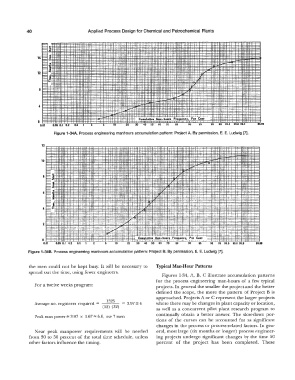
                        Figure 1-34A. Process engineering manhours accumulation pattern: Project A.  By permission, E.  E.  Ludwig [7].


                   10


                                                                .1-·
                                                                  r'                                   . ...,....
                                                                                   ..
                                                                               �,  .. .;·   I  r-L...!.....I.....
                                                                          --�..:...;_  �-,..:--'--=-t"""+
                                                                              ii::ti=i=-=t:1- -   �  �--j-
                                                                               �-+-          -,........;
                                                                           !  i.J.+.,:r:::d  ..... :r..  '
                                                  +'-'-"  ltt  I+  .
                                                       ;  ./-�r  -r-t-r-
                                                    i  r·  ·:-·   .
                   2                             -l--!--Y.,:��i..,.;. ....  1                  :  -!-
                                                                                                     ,-  ·r.
                                                                                                       1-:.·
                                                           C••ul11tlYe. Men� h��"  :  Fre-ri,_�'!.�Y�:  Per· Cent'
                   0                                                                    ,-L�-
                    0.01   0.05  0.1  0.2   0.5   2   10   20   30   40   50   60   70   BO   90   15   88   99   99.5  99.B  99.9   "·"
             Figure 1-348.  Process engineering manhours accumulation pattern: Project B.  By permission, E.  E.  Ludwig [7].

              the  men  could  not be  kept busy.  It will  be  necessary  to   Typical Man-Hour Patterns
             spread out the time,  using fewer engineers.
                                                                     Figures  1-34,  A,  B,  C  illustrate  accumulation  patterns
                                                                   for  the  process  engineering  man-hours  of a  few  typical
                For a twelve weeks program:
                                                                   projects.  In general  the smaller the project and the better
                                                                   defined  the  scope,  the  more  the  pattern  of Project B  is
                                                                   approached.  Projects A or C represent the larger projects
                Average no. engineers  required  =   1525   3.97 == 4   where there may be changes in plant capacity or location,
                                            ( 12)  (32)
                                                                   as  well  as  a  concurrent pilot plant research  program  to
                Peak man  power== 3.97  x  l.67 = 6.6,  use 7 men   continually  obtain  a  better  answer.  The  slow-down  por-
                                                                   tions  of the  curves  can  be  accounted  for  as  significant
                                                                   changes in  the process or process-related factors.  In gen-
                Near  peak  manpower  requirements  will  be  needed   eral,  most large  (six months or longer)  process engineer-
              from  30  to  50  percent of the  total  time schedule,  unless   ing projects  undergo  significant changes  by  the  time  50
              other factors influence the timing.                  percent  of  the  project  has  been  completed.  These

