


Page 197 - Jurnal Pendidikan Tingkatan Enam 2019 - Jilid 3
P. 197
JURNAL PENDIDIKAN TINGKATAN ENAM 2019 JILID 3


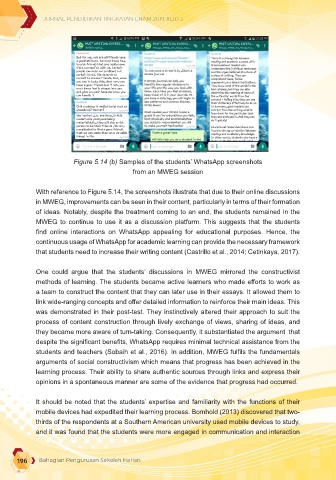
                       Figure 5.14 (b) Samples of the students’ WhatsApp screenshots
                     Figure 5.14 (b) Samples of the students’ WhatsApp screenshots
                                         from an MWEG session
                                        from an MWEG session
            With reference to Figure 5.14, the screenshots illustrate that due to their online discussions

            in MWEG, improvements can be seen in their content, particularly in terms of their formation
       With reference to Figure 5.14, the screenshots illustrate that due to their online discussions in
            of ideas. Notably, despite the treatment coming to an end, the students remained in the
            MWEG to continue to use it as a discussion platform. This suggests that the students
       MWEG, improvements can be seen in their content, particularly in terms of their formation of
            find  online  interactions  on  WhatsApp  appealing  for  educational  purposes.  Hence,  the
       ideas. Notably, despite the treatment coming to an end, the students remained in the MWEG
            continuous usage of WhatsApp for academic learning can provide the necessary framework
       to continue to use it as a discussion platform. This suggests that the students find online
            that students need to increase their writing content (Castrillo et al., 2014; Cetinkaya, 2017).
       interactions on WhatsApp appealing for educational purposes. Hence, the continuous usage
            One could  argue that the students’ discussions  in MWEG mirrored  the constructivist
       of WhatsApp for academic learning can provide the necessary framework that students need
            methods of learning. The students became active learners who made efforts to work as
       to increase their writing content (Castrillo et al., 2014; Cetinkaya, 2017).
            a team to construct the content that they can later use in their essays. It allowed them to
            link wide-ranging concepts and offer detailed information to reinforce their main ideas. This
       One could argue that the students’ discussions in MWEG mirrored the constructivist methods
            was demonstrated in their post-test. They instinctively altered their approach to suit the
            process of content construction through lively exchange of views, sharing of ideas, and
       of learning. The students became active learners who made efforts to work as a team to
            they became more aware of turn-taking. Consequently, it substantiated the argument  that
       construct the content that they can later use in their essays. It allowed them to link wide-
            despite the significant benefits, WhatsApp requires minimal technical assistance from the
       ranging  concepts and  offer detailed information to  reinforce  their main  ideas.  This  was
            students and teachers (Sobaih et al., 2016). In addition, MWEG fulfils the fundamentals
       demonstrated in their post-test. They instinctively altered their approach to suit the process of
            arguments of social constructivism which means that progress has been achieved in the
            learning process. Their ability to share authentic sources through links and express their
       content construction through lively exchange of views, sharing of ideas, and they became
            opinions in a spontaneous manner are some of the evidence that progress had occurred.
       more aware of  turn-taking. Consequently, it substantiated the argument   that despite  the
       significant benefits, WhatsApp requires minimal technical assistance from the students and
            It should be noted that the students’ expertise and familiarity with the functions of their
       teachers (Sobaih et al., 2016). In addition, MWEG fulfils the fundamentals arguments of social
            mobile devices had expedited their learning process. Bomhold (2013) discovered that two-
            thirds of the respondents at a Southern American university used mobile devices to study,
       constructivism which means that progress has been achieved in the learning process. Their
            and it was found that the students were more engaged in communication and interaction
       ability to share authentic sources through links and express their opinions in a spontaneous

       manner are some of the evidence that progress had occurred.

      196    Bahagian Pengurusan Sekolah Harian
       It should be noted that the students’ expertise and familiarity with the functions of their mobile

       devices had expedited their learning process. Bomhold (2013) discovered that two-thirds of
       the respondents at a Southern American university used mobile devices to study, and it was

