


Page 14 - Module DMV20173
P. 14
2.0    CASTING PROCESSES


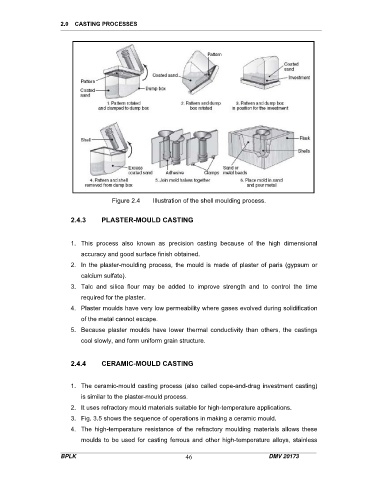
                                      Figure 2.4    Illustration of the shell moulding process.


                        2.4.3      PLASTER-MOULD CASTING


                        1.  This  process  also  known  as  precision  casting  because  of  the  high  dimensional
                            accuracy and good surface finish obtained.
                        2.  In the plaster-moulding process, the mould is made of plaster of paris (gypsum or
                            calcium sulfate).
                        3.  Talc  and  silica  flour  may  be  added  to  improve  strength  and  to  control  the  time

                            required for the plaster.
                        4.  Plaster moulds have very low permeability where gases evolved during solidification
                            of the metal cannot escape.
                        5.  Because  plaster  moulds  have  lower  thermal  conductivity  than  others,  the  castings

                            cool slowly, and form uniform grain structure.

                        2.4.4      CERAMIC-MOULD CASTING


                        1.  The ceramic-mould casting process (also called cope-and-drag investment casting)
                            is similar to the plaster-mould process.
                        2.  It uses refractory mould materials suitable for high-temperature applications.

                        3.  Fig. 3.5 shows the sequence of operations in making a ceramic mould.
                        4.  The  high-temperature  resistance  of  the  refractory  moulding  materials  allows  these
                            moulds  to be used for casting ferrous  and other  high-temperature alloys, stainless


                     BPLK                                       46                         DMV 20173

