


Page 529 - Python Data Science Handbook
P. 529
In[13]: test_image = skimage.data.astronaut()
                              test_image = skimage.color.rgb2gray(test_image)
                              test_image = skimage.transform.rescale(test_image, 0.5)
                              test_image = test_image[:160, 40:180]

                              plt.imshow(test_image, cmap='gray')
                              plt.axis('off');


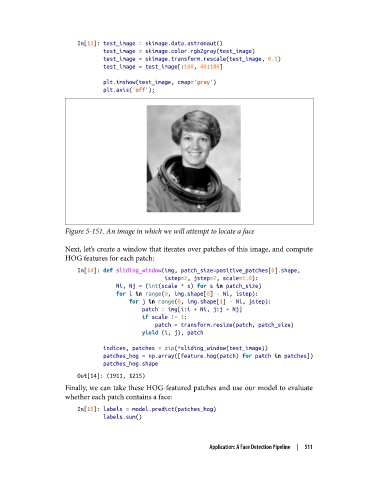
                   Figure 5-151. An image in which we will attempt to locate a face

                   Next, let’s create a window that iterates over patches of this image, and compute
                   HOG features for each patch:
                      In[14]: def sliding_window(img, patch_size=positive_patches[0].shape,
                                                 istep=2, jstep=2, scale=1.0):
                                  Ni, Nj = (int(scale * s) for s in patch_size)
                                  for i in range(0, img.shape[0] - Ni, istep):
                                      for j in range(0, img.shape[1] - Ni, jstep):
                                          patch = img[i:i + Ni, j:j + Nj]
                                          if scale != 1:
                                              patch = transform.resize(patch, patch_size)
                                          yield (i, j), patch
                              indices, patches = zip(*sliding_window(test_image))
                              patches_hog = np.array([feature.hog(patch) for patch in patches])
                              patches_hog.shape
                      Out[14]: (1911, 1215)
                   Finally, we can take these HOG-featured patches and use our model to evaluate
                   whether each patch contains a face:
                      In[15]: labels = model.predict(patches_hog)
                              labels.sum()


                                                           Application: A Face Detection Pipeline  |  511

