


Page 391 - Towards Trustworthy Elections New Directions in Electronic Voting by Ed Gerck (auth.), David Chaum, Markus Jakobsson, Ronald L. Rivest, Peter Y. A. Ryan, Josh Benaloh, Miroslaw Kutylowski, Ben Adida ( (z-lib.org (1)
P. 391
Attacking Paper-Based E2E Voting Systems


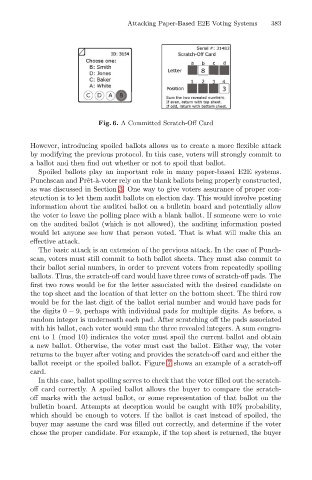
                                             Fig. 6. A Committed Scratch-Off Card            383

                          However, introducing spoiled ballots allows us to create a more flexible attack
                          by modifying the previous protocol. In this case, voters will strongly commit to
                          a ballot and then find out whether or not to spoil that ballot.
                            Spoiled ballots play an important role in many paper-based E2E systems.
                          Punchscan and Prˆet-`a-voter rely on the blank ballots being properly constructed,
                          as was discussed in Section 3. One way to givevoters assuranceof proper con-
                          struction is to let them audit ballots on election day. This would involve posting
                          information about the audited ballot on a bulletin board and potentially allow
                          the voter to leave the polling place with a blank ballot. If someone were to vote
                          on the audited ballot (which is not allowed), the auditing information posted
                          would let anyone see how that person voted. That is what will make this an
                          effective attack.
                            The basic attack is an extension of the previous attack. In the case of Punch-
                          scan, voters must still commit to both ballot sheets. They must also commit to
                          their ballot serial numbers, in order to prevent voters from repeatedly spoiling
                          ballots. Thus, the scratch-off card would have three rows of scratch-off pads. The
                          first two rows would be for the letter associated with the desired candidate on
                          the top sheet and the location of that letter on the bottom sheet. The third row
                          would be for the last digit of the ballot serial number and would have pads for
                          the digits 0 − 9, perhaps with individual pads for multiple digits. As before, a
                          random integer is underneath each pad. After scratching off the pads associated
                          with his ballot, each voter would sum the three revealed integers. A sum congru-
                          ent to 1 (mod 10) indicates the voter must spoil the current ballot and obtain
                          a new ballot. Otherwise, the voter must cast the ballot. Either way, the voter
                          returns to the buyer after voting and provides the scratch-off card and either the
                          ballot receipt or the spoiled ballot. Figure 7 shows an example of a scratch-off
                          card.
                            In this case, ballot spoiling serves to check that the voter filled out the scratch-
                          off card correctly. A spoiled ballot allows the buyer to compare the scratch-
                          off marks with the actual ballot, or some representation of that ballot on the
                          bulletin board. Attempts at deception would be caught with 10% probability,
                          which should be enough to voters. If the ballot is cast instead of spoiled, the
                          buyer may assume the card was filled out correctly, and determine if the voter
                          chose the proper candidate. For example, if the top sheet is returned, the buyer

