


Page 392 - Towards Trustworthy Elections New Directions in Electronic Voting by Ed Gerck (auth.), David Chaum, Markus Jakobsson, Ronald L. Rivest, Peter Y. A. Ryan, Josh Benaloh, Miroslaw Kutylowski, Ben Adida ( (z-lib.org (1)
P. 392
J. Kelsey et al.
                          384


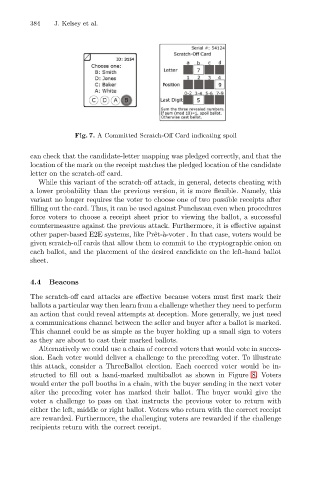
                                      Fig. 7. A Committed Scratch-Off Card indicating spoil

                          can check that the candidate-letter mapping was pledged correctly, and that the
                          location of the mark on the receipt matches the pledged location of the candidate
                          letter on the scratch-off card.
                            While this variant of the scratch-off attack, in general, detects cheating with
                          a lower probability than the previous version, it is more flexible. Namely, this
                          variant no longer requires the voter to choose one of two possible receipts after
                          filling out the card. Thus, it can be used against Punchscan even when procedures
                          force voters to choose a receipt sheet prior to viewing the ballot, a successful
                          countermeasure against the previous attack. Furthermore, it is effective against
                          other paper-based E2E systems, like Prˆet-`a-voter . In that case, voters would be
                          given scratch-off cards that allow them to commit to the cryptographic onion on
                          each ballot, and the placement of the desired candidate on the left-hand ballot
                          sheet.


                          4.4  Beacons
                          The scratch-off card attacks are effective because voters must first mark their
                          ballots a particular way then learn from a challenge whether they need to perform
                          an action that could reveal attempts at deception. More generally, we just need
                          a communications channel between the seller and buyer after a ballot is marked.
                          This channel could be as simple as the buyer holding up a small sign to voters
                          as they are about to cast their marked ballots.
                            Alternatively we could use a chain of coerced voters that would vote in succes-
                          sion. Each voter would deliver a challenge to the preceding voter. To illustrate
                          this attack, consider a ThreeBallot election. Each coerced voter would be in-
                          structed to fill out a hand-marked multiballot as shown in Figure 8. Voters
                          would enter the poll booths in a chain, with the buyer sending in the next voter
                          after the preceding voter has marked their ballot. The buyer would give the
                          voter a challenge to pass on that instructs the previous voter to return with
                          either the left, middle or right ballot. Voters who return with the correct receipt
                          are rewarded. Furthermore, the challenging voters are rewarded if the challenge
                          recipients return with the correct receipt.

