


Page 393 - Towards Trustworthy Elections New Directions in Electronic Voting by Ed Gerck (auth.), David Chaum, Markus Jakobsson, Ronald L. Rivest, Peter Y. A. Ryan, Josh Benaloh, Miroslaw Kutylowski, Ben Adida ( (z-lib.org (1)
P. 393
Attacking Paper-Based E2E Voting Systems


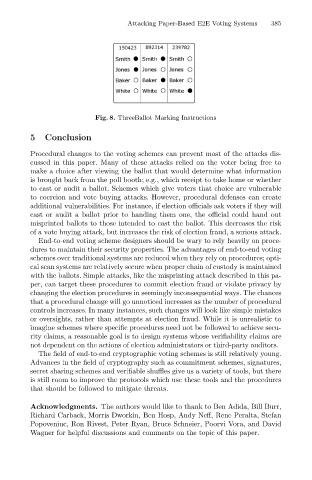
                                            Fig. 8. ThreeBallot Marking Instructions        385


                          5   Conclusion

                          Procedural changes to the voting schemes can prevent most of the attacks dis-
                          cussed in this paper. Many of these attacks relied on the voter being free to
                          make a choice after viewing the ballot that would determine what information
                          is brought back from the poll booth; e.g., which receipt to take home or whether
                          to cast or audit a ballot. Schemes which give voters that choice are vulnerable
                          to coercion and vote buying attacks. However, procedural defenses can create
                          additional vulnerabilities. For instance, if election officials ask voters if they will
                          cast or audit a ballot prior to handing them one, the official could hand out
                          misprinted ballots to those intended to cast the ballot. This decreases the risk
                          of a vote buying attack, but increases the risk of election fraud, a serious attack.
                            End-to-end voting scheme designers should be wary to rely heavily on proce-
                          dures to maintain their security properties. The advantages of end-to-end voting
                          schemes over traditional systems are reduced when they rely on procedures; opti-
                          cal scan systems are relatively secure when proper chain of custody is maintained
                          with the ballots. Simple attacks, like the misprinting attack described in this pa-
                          per, can target these procedures to commit election fraud or violate privacy by
                          changing the election procedures in seemingly inconsequential ways. The chances
                          that a procedural change will go unnoticed increases as the number of procedural
                          controls increases. In many instances, such changes will look like simple mistakes
                          or oversights, rather than attempts at election fraud. While it is unrealistic to
                          imagine schemes where specific procedures need not be followed to achieve secu-
                          rity claims, a reasonable goal is to design systems whose verifiability claims are
                          not dependent on the actions of election administrators or third-party auditors.
                            The field of end-to-end cryptographic voting schemes is still relatively young.
                          Advances in the field of cryptography such as commitment schemes, signatures,
                          secret sharing schemes and verifiable shuffles give us a variety of tools, but there
                          is still room to improve the protocols which use these tools and the procedures
                          that should be followed to mitigate threats.

                          Acknowledgments. The authors would like to thank to Ben Adida, Bill Burr,
                          Richard Carback, Morris Dworkin, Ben Hosp, Andy Neff, Rene Peralta, Stefan
                          Popoveniuc, Ron Rivest, Peter Ryan, Bruce Schneier, Poorvi Vora, and David
                          Wagner for helpful discussions and comments on the topic of this paper.

