


Page 168 - (ISC)² CISSP Certified Information Systems Security Professional Official Study Guide
P. 168
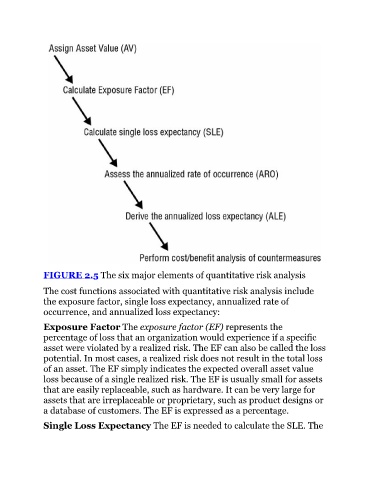
FIGURE 2.5 The six major elements of quantitative risk analysis

               The cost functions associated with quantitative risk analysis include
               the exposure factor, single loss expectancy, annualized rate of

               occurrence, and annualized loss expectancy:

               Exposure Factor The exposure factor (EF) represents the
               percentage of loss that an organization would experience if a specific
               asset were violated by a realized risk. The EF can also be called the loss
               potential. In most cases, a realized risk does not result in the total loss
               of an asset. The EF simply indicates the expected overall asset value
               loss because of a single realized risk. The EF is usually small for assets

               that are easily replaceable, such as hardware. It can be very large for
               assets that are irreplaceable or proprietary, such as product designs or
               a database of customers. The EF is expressed as a percentage.

               Single Loss Expectancy The EF is needed to calculate the SLE. The

